

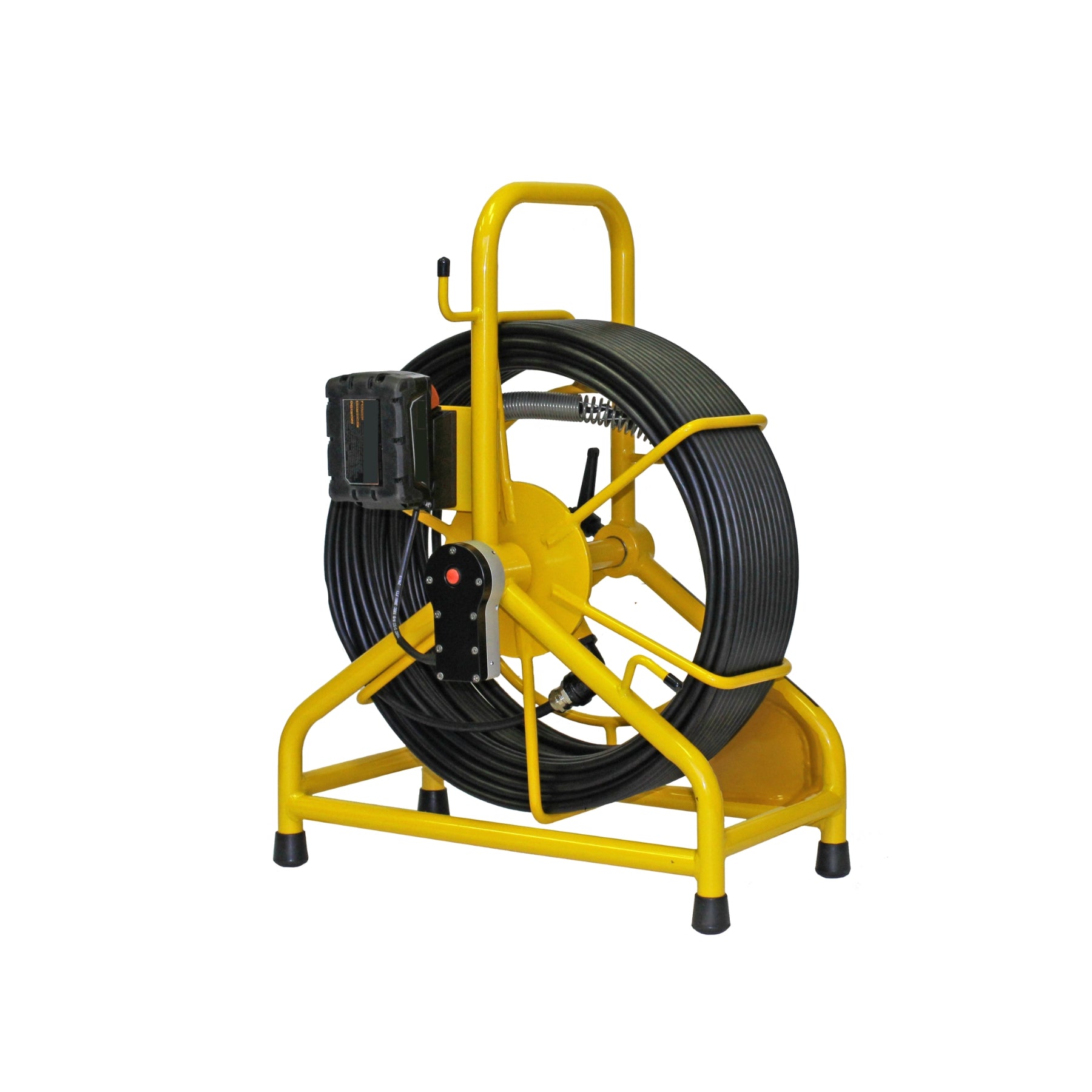

A drain camera can pass through a 1.5-inch P-trap only if the head is well under the pipe's inside diameter, which in practice means a 0.75 in (19 mm) head on a flexible push cable. Heads of 1 in and larger will not make the two tight 90° turns of a trap. When the head is too big, pull the trap or go in through a cleanout.
- A 0.75 in (19 mm) head is the right size for a 1.5-inch P-trap; 1 in and 36 mm heads are not.
- The MiniFlex 2 19mm is the Fiberscope.net system built for small traps and carries a 512 Hz sonde.
- If the head will not turn the trap, remove the trap or enter at a cleanout.
- A drain camera for P-trap work must clear the smallest fitting, not just the pipe size.
Fiberscope.net sells and services the cameras discussed here, so the picks below come from what we configure for plumbers every week.
Can a drain camera pass through a 1.5-inch P-trap?
Yes, with a 0.75 in (19 mm) head on a flexible cable. A 1.5-inch trap has a bore of about 1.5 in (38 mm), and the camera has to turn two tight bends inside it. A head that fills half the bore has room to rotate through the curve. A head that fills most of it jams.
The MiniFlex 2 19mm Small Drain Camera Extended Set is the system we point plumbers to for this job, from $5,229. One customer, Hayden E., wrote that he used it to get through 1.5 in pool elbows and diagnose a collapsed skimmer line. That is the same geometry as a trap: a 1.5-inch bore with sharp turns. For related small-line work, see push cameras on 1.5-inch pool and spa lines.
Why head diameter decides whether the camera passes
The pipe size on the label is not the limit. The limit is the smallest, tightest fitting the head must travel through. A P-trap is the worst case in a house drain: the water seal bends the line down and back up within a few inches.
The plumbing code sets the trap size by fixture. Kitchen sink traps are typically 1.5 in under the International Plumbing Code, and bathroom lavatories are typically 1.25 in. A head sized for a 1.5-inch trap may therefore not pass a 1.25-inch lavatory trap at all. Measure the fitting before you pick the camera.
Push cable stiffness matters too. A stiff cable drives the head into the outside wall of each bend instead of following it. Small-diameter cables flex more, which is why the 0.75 in head class exists.
Head size vs trap size
| Head | Head diameter | Fits a 1.5-inch trap? | Typical use |
|---|---|---|---|
| MiniFlex 2 19mm | 0.75 in (19 mm) | Yes, with room to turn | Traps, small drains, pool elbows |
| VIPER Mid straight-view head | 1 in (25 mm) | No | Straight 1.25–6 inch runs |
| MiniFlex 2 36mm | 1.42 in (36 mm) | No, fills nearly the whole bore | 2–6 inch pipes |
The VIPER Mid head is rated for 1.25–6 inch straight runs, which covers most residential laterals but not a trap with two sharp turns. The MiniFlex 2 36mm is sold for 2–6 inch pipes. Neither belongs in a 1.5-inch trap.
MiniFlex 2 19mm: the pick for 1.5-inch traps
The MiniFlex 2 19mm Extended Set is an all-in-one plumber's camera built for portability and maneuverability, and its head carries a 512 Hz sonde. A sonde is a small transmitter in the head; a separate locator picks up its signal so you can find the defect from above. The sonde lets you mark a break after the trap without guessing.
It suits plumbers working kitchen and bath drains, pool and spa lines, and short laterals reached through a cleanout. It does not replace a larger system for long mainline runs, and its head is too small to center itself in a 4-inch pipe. Customers also use it for specialty work: Ron A. reported inspecting 28 direct-vent fireplaces in two hours with it.
When the head is too big: pull the trap or use a cleanout
If you own a 1-inch or 36 mm system, you can still inspect the line. Most 1.5-inch trap work with these systems is done by removing the trap and feeding the head from the open pipe. Cleanouts do the same job without disassembly.
For 4-inch lines with a trap, the TrapMaster skid is designed to negotiate a trap in a 4 inch pipe and keep the head centered. It does not help in a 1.5-inch trap. Skid choices are covered in best sewer camera skids for push cameras.
Choosing a camera for P-trap work
- Measure the smallest fitting on the route, not the main line.
- Pick a head at or below about half the trap bore.
- Choose a flexible cable over a stiff one for bends.
- Add a sonde if you need to locate defects after the trap.
- Check the drain type: lavatory traps are smaller than kitchen traps.
For broader selection by plumbing task, read best drain inspection cameras for plumbers.
Other options
If your work is almost entirely traps and cleanouts and you do not need a sonde or recording, a lower-cost handheld inspection camera from a brand such as RIDGID may be the better buy. If you work mostly 2–6 inch lines, the MiniFlex 2 36mm is the better fit and you take the trap off when you need to see inside it.


Watch our drain cameras working on the Fiberscope.net YouTube channel.
Reporting what you find
Once the camera is through the trap, record the footage. Contractors working to municipal specs often code defects to the NASSCO PACP standard, which defines how cracks, roots and offsets are scored.
FAQ
What size drain camera fits a 1.5-inch P-trap?
A head of about 0.75 in (19 mm) fits a 1.5-inch trap. A 1 in or 1.42 in head fills too much of the bore to turn the bends.
Can a 1-inch drain camera head go through a kitchen sink trap?
Not reliably. A 1 in head is rated for straight 1.25–6 inch runs, and a trap has two sharp bends. Pull the trap or enter at a cleanout.
Should I take the P-trap off before running a camera?
Yes, if your head is over 0.75 in. Removing the trap gives a straight path into the line and avoids a stuck head.
Will a 512 Hz sonde work from a head that small?
Yes. The MiniFlex 2 19mm head carries a 512 Hz sonde, and you locate it from above with a compatible receiver.
Does a skid help a camera pass a P-trap?
Only in larger pipe. The TrapMaster skid is designed for traps in 4 inch pipe and will not fit a 1.5-inch trap.
Send us your trap and line details
Send us your trap size, pipe size, run length, bends and whether you need locating, and a Fiberscope.net specialist will match the right head and reel. Use the contact page or call 1-877-613-2210, Monday to Friday, 8:00–18:00 CST.
Related guides
About the author: Vladimir Khubiryants founded Fiberscope.net to give professionals access to reliable video inspection equipment without enterprise pricing. For over 20 years he has sourced and tested borescopes, sewer cameras and fiberscopes in Fiberscope.net's in-house test and repair facility, helping plumbers, pipeline engineers, aviation and military teams choose the right tool for the job. See our cameras in use on YouTube and Instagram.


Leave a comment
This site is protected by hCaptcha and the hCaptcha Privacy Policy and Terms of Service apply.