

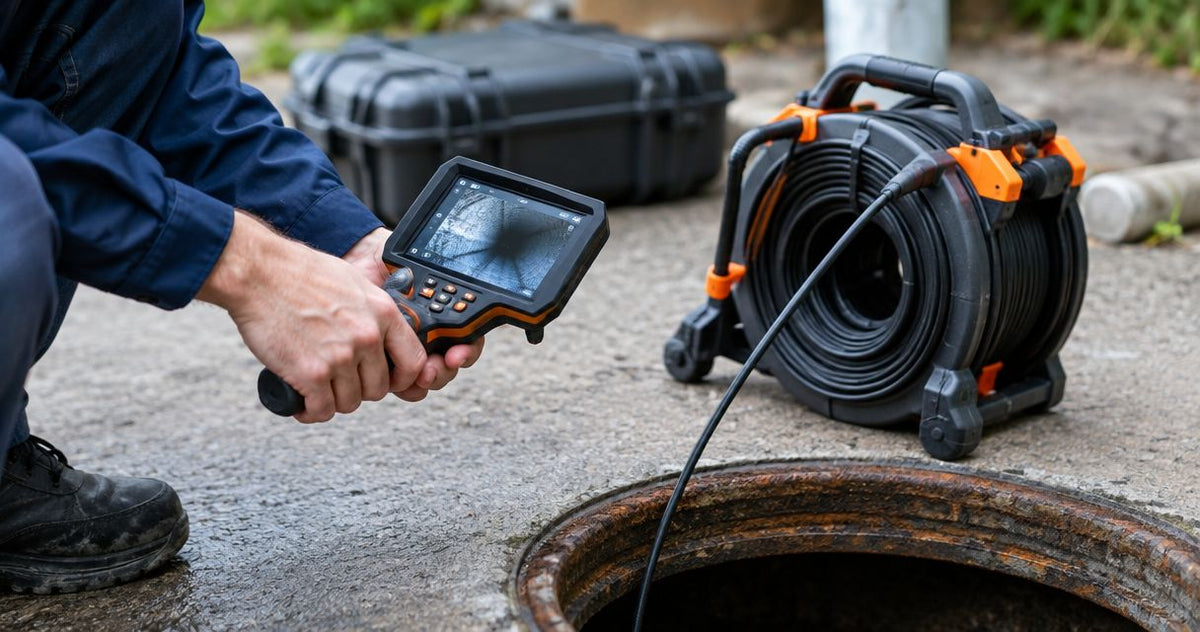
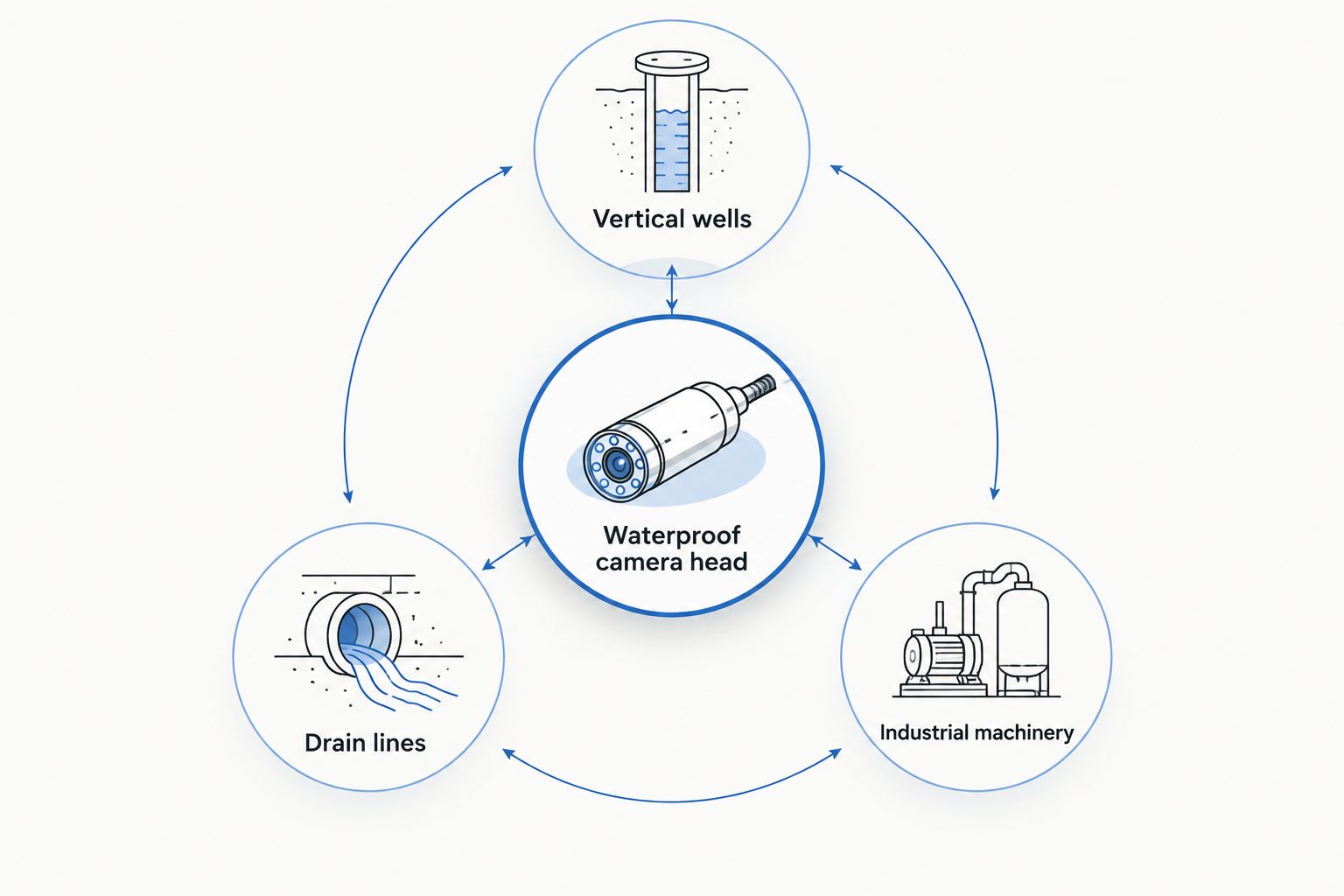
Waterproof inspection cameras cover very different jobs — descending into a water-filled well, running a push cable through a wet drain line, or checking a fluid-filled industrial cavity — and the right pick depends on access opening, depth or reach, and how wet the environment actually gets. The STRAHL HD Well Inspection Camera fits vertical wells, boreholes, and tanks; the MiniFlex Plumbing Inspection Camera fits small-diameter residential drain lines; the Drain Camera Viper Mid fits mid-diameter drain runs needing longer reach. Fiberscope sells the products discussed. Recommendations are based on current published specifications and stated use cases; confirm final configuration and compatibility with Fiberscope before purchase.
- Best waterproof inspection cameras in 2026 split by deployment method, not one universal ranking: wells, drains, and industrial cavities need different sealing.
- STRAHL HD Well Inspection Camera is cable-lowered for vertical wells, boreholes, and tanks — fully submersible by design.
- MiniFlex, iSnake, and Drain Camera Viper Mid are manually fed push-camera systems, not self-propelled crawlers.
- Videoscope Voyager M40 HD is a hand-held industrial videoscope for machinery and tank interiors, not a pipe camera.
- Confirm head diameter, cable or reel length, and sealing rating with Fiberscope before ordering any configuration.
Why this matters
A camera that isn't sealed for the environment it's used in either fails mid-inspection or gets damaged beyond repair, and a flooded vault or a wet drain line rarely gives a technician a second attempt. The category spans wells, drain lines, tanks, and industrial machinery in 2026, and each of those environments demands a different sealing standard and deployment method — not one universal "waterproof" spec.
Job conditions to check first
Answer these before comparing any camera:
- Access opening — well casing diameter, drain cleanout size, or tank/machinery port diameter
- Depth or route length — how far down a well goes, or how far a drain camera cable needs to reach
- Environment — standing water, active flow, or condensation, versus a dry cavity with only occasional splash
- Deployment method — lowered on a cable reel (wells, tanks), pushed through a pipe (drains), or hand-inserted through a port (machinery)
- Evidence needed — recorded video for a service report, still images for a one-time check, or live view only
- Service requirements — whether the head needs a rating for chemical or wastewater exposure beyond plain water
“A camera head rated for splash resistance is not rated for full submersion.”
What makes a waterproof inspection camera reliable
- Camera head sealing rated for full submersion, not just splash resistance
- Cable and connector jacket sealed at the reel end, not just at the head
- Deployment hardware — reel, cable, or pole — suited to the access opening and depth or reach required
- Display or recording unit protected from moisture when used outdoors or over open water
- A documented pipe, well, or component range from the manufacturer, not inferred from a product name
- Skid, sonde, or adapter compatibility confirmed for the exact configuration, never assumed from a "universal" label
Waterproof inspection cameras at a glance
| System | Best for | Standout feature | Key limitation |
|---|---|---|---|
| STRAHL HD Well Inspection Camera | Vertical wells, boreholes, tanks | Cable-lowered, submersible for full descent | Not built for horizontal drain-line push work |
| MiniFlex Plumbing Inspection Camera | Small-diameter residential drain lines | Compact head for tight cleanouts | Shorter reach than mid-diameter systems |
| iSnake Drain Camera | Branch lines with bends and P-traps | Flexible cable for tighter bend radii | Not sized for large mainline diameters |
| Drain Camera Viper Mid | Mid-diameter drain runs needing more reach | Longer cable than compact systems | Bulkier reel — confirm fits the access point |
| Videoscope Voyager M40 HD | Industrial machinery and tank interiors | Hand-held insertion through an access port | Not intended for pipe runs or well descent |
1. STRAHL HD Well Inspection Camera: best for vertical wells and boreholes
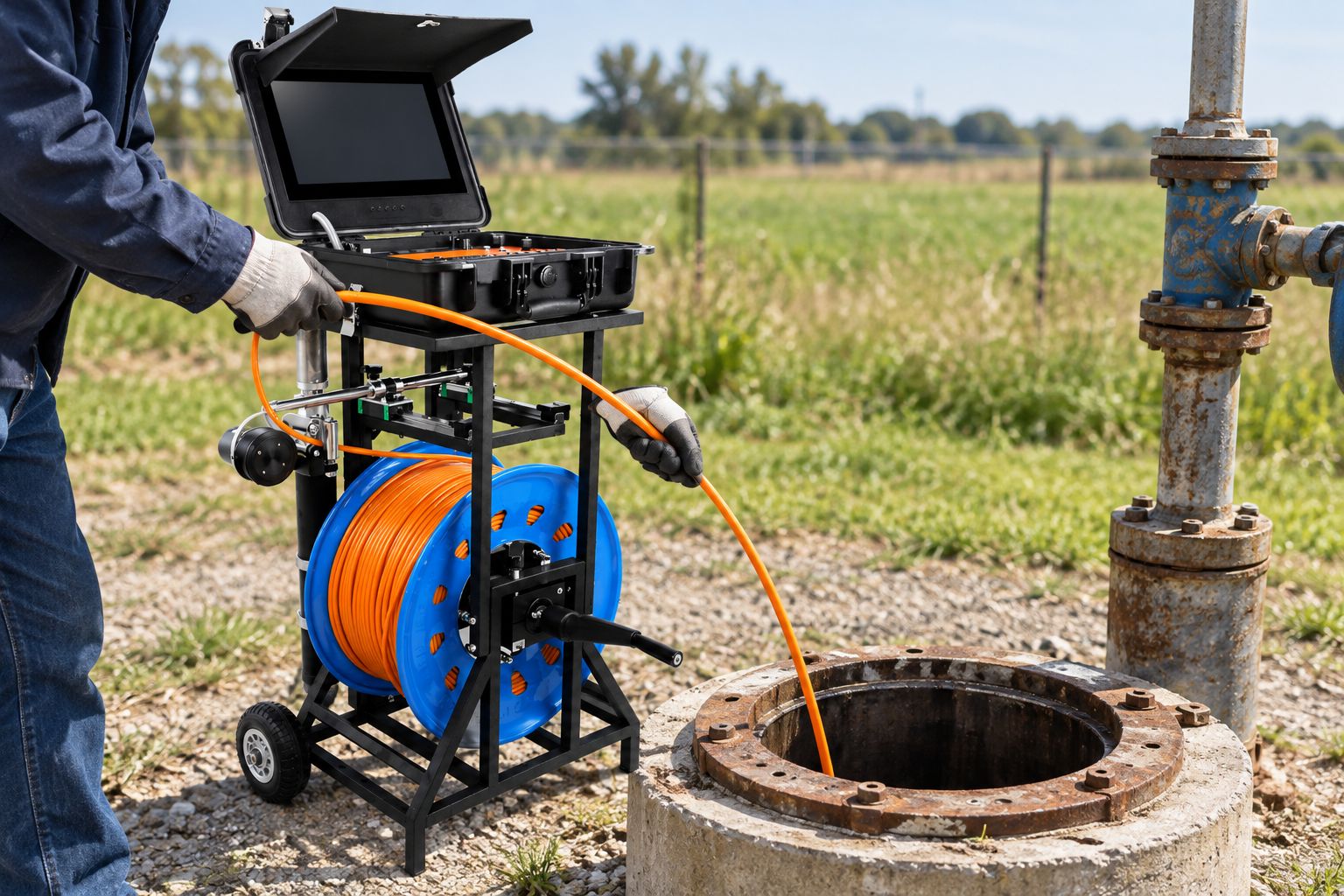
The STRAHL HD Well Inspection Camera lowers on a cable reel into vertical openings to check water wells, boreholes, shafts, and tanks. Because the head operates fully submerged for the entire descent, sealing at both the head and the cable jacket matters more here than on any push-camera system. Confirm the well casing or access diameter and the target depth against the published reel length before ordering.
STRAHL HD pros:
- Built for vertical, cable-lowered deployment into water-filled openings
- Suited to wells, boreholes, reservoirs, and tanks in one system
- Reel-based deployment simplifies depth tracking during descent
STRAHL HD cons:
- Not designed for horizontal drain-line push inspection
- Depth capability ties to the specific reel length ordered — confirm before purchase
- Not a fit for tight P-trap or multi-bend branch lines
Best for: vertical wells, boreholes, and tanks where the camera head is submerged for the full inspection.
2. MiniFlex Plumbing Inspection Camera: best for small-diameter residential drain lines
The MiniFlex Plumbing Inspection Camera is a push-camera system sized for small-diameter residential branch lines and cleanouts. The push cable is manually fed by the operator, and the compact head is built to fit openings too small for a mid-size drain camera. It is not a self-propelled system — the technician controls cable advance by hand.
MiniFlex pros:
- Compact head fits small cleanouts and branch-line openings
- Manual push-cable control gives direct feedback on resistance and bends
- Sized for typical residential drain diameters
MiniFlex cons:
- Reach is shorter than mid-diameter drain camera systems — confirm cable length against route length
- Not intended for large-diameter mainline or storm-drain work
- Manual feed means longer runs take more operator time than a reel-driven system
Best for: small-diameter residential drain and branch-line inspections where access is tight.
3. iSnake Drain Camera: best for branch lines with bends and P-traps
The iSnake Drain Camera uses a flexible push cable designed to route through P-traps and tighter bend radii than a stiffer system typically allows. It's a push-camera, not a self-propelled crawler — the operator advances the cable and reads bend feedback by hand. Confirm the minimum bend radius and head diameter against the exact trap and pipe geometry before use.
iSnake pros:
- Flexible cable navigates multiple bends without forcing the head
- Compact enough for common P-trap geometries
- Push-cable feedback helps identify obstructions by feel
iSnake cons:
- Flexibility trades off some rigidity needed for very long straight pulls
- Not built for large-diameter mainline runs
- Bend-radius limits still apply — confirm before attempting sharp double bends
Best for: drain lines with multiple bends or P-traps where a stiffer cable would bind.
4. Drain Camera Viper Mid: best for mid-diameter drain runs needing more reach
The Drain Camera Viper Mid steps up from compact systems like MiniFlex with a longer push cable suited to mid-diameter drain and branch lines running farther from the access point. It remains a manually fed push-camera system. Verify the published cable length and head diameter against the actual route length and pipe ID before choosing it over a compact system.
Viper Mid pros:
- Longer cable reach than compact drain cameras
- Head sized for mid-diameter residential and light-commercial lines
- Works with compatible skids where documented for centering in larger pipe
Viper Mid cons:
- Bulkier reel than compact systems — confirm it suits the access point
- Not verified for large mainline diameters without a compatible skid
- Push-cable systems still require manual feed over long distances
Best for: mid-diameter drain lines where the route runs farther than a compact system's cable allows.
5. Videoscope Voyager M40 HD: best for industrial machinery and tank interiors
The Videoscope Voyager M40 HD is an industrial video borescope used to inspect internal components, cavities, and tank interiors in mechanical and industrial equipment. Unlike the drain and well cameras above, it's typically hand-held and inserted through an access port rather than lowered or pushed through a pipe run. Confirm the insertion tube diameter and length against the target port and cavity depth, and verify the head's sealing rating if the component holds standing fluid.
Voyager M40 HD pros:
- Hand-held insertion suits mechanical and industrial access ports
- Applicable across a range of internal component and cavity checks
- Semi-rigid insertion tube gives more control in tight cavities than a push cable
Voyager M40 HD cons:
- Not a fit for long horizontal drain or sewer runs
- Insertion tube length is fixed to the ordered configuration — confirm before purchase
- Not intended for vertical well or borehole descent
Best for: industrial machinery and tank interiors accessed through a port rather than a pipe run.
Storm drains, culverts, and mainline runs
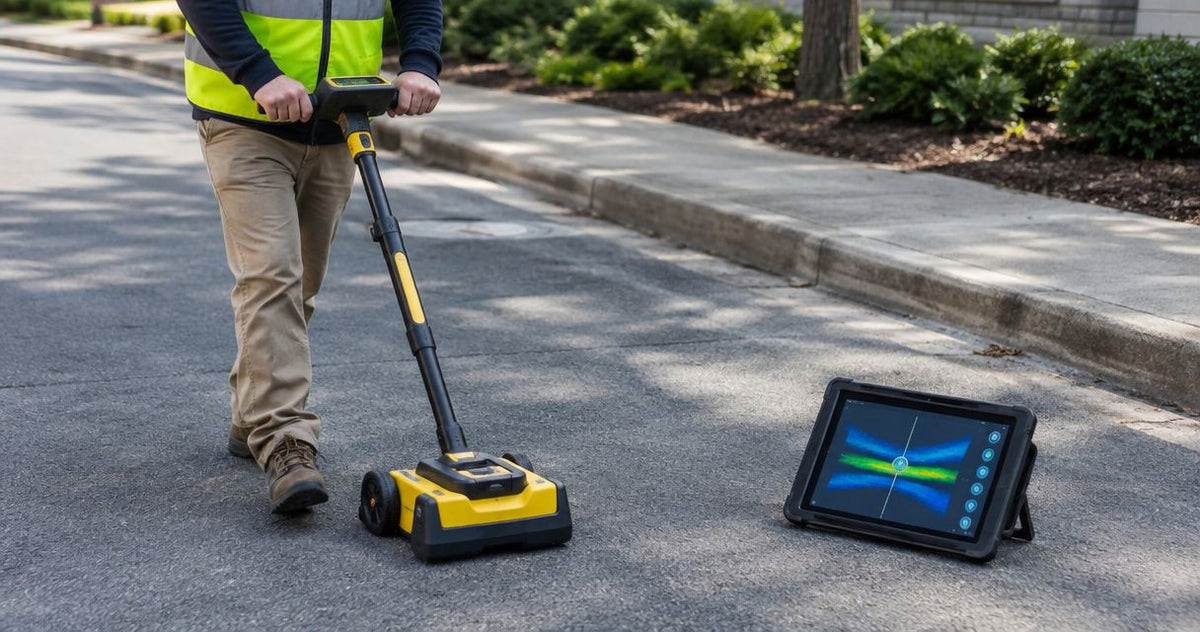
Storm drains, culverts, and larger mainline runs sit outside all five systems above — they need more diameter and reach than a drain camera built for residential branch lines. The Mainline Inspection Zoom Camera CYCLOPS TZ is built for that class of larger-diameter, higher-flow line. Confirm route length, pipe diameter, and flow conditions with Fiberscope before choosing between a mid-diameter drain camera and a mainline-class system.


How we ranked
Each system above earned its place by matching a distinct deployment method and environment, not by outranking the others on one scale. Vertical, cable-lowered systems (STRAHL HD) are judged on sealing at depth and reel length. Push-camera systems (MiniFlex, iSnake, Viper Mid) are judged on cable reach, bend tolerance, and head diameter against the access opening. Hand-held systems (Voyager M40 HD) are judged on insertion tube length and cavity access. None of the five are directly interchangeable — picking between them starts with the job conditions above, not a feature checklist.
Which waterproof inspection camera should you choose in 2026?
Start with the access opening and the environment, not the camera. If the job is a vertical well, borehole, or tank, the STRAHL HD Well Inspection Camera fits the deployment method — cable-lowered, fully submersible for the length of the descent. If the job is a residential drain line with a tight cleanout, the MiniFlex Plumbing Inspection Camera is sized for that access point; if the same line has multiple bends or a P-trap, the iSnake Drain Camera's flexible cable is the better match. Mid-diameter runs needing more reach than either compact system point to the Drain Camera Viper Mid, and industrial machinery or tank interiors accessed through a port point to the Videoscope Voyager M40 HD. Storm drains, culverts, and larger mainline runs sit outside all five — for that class of line, the sewer inspection camera guide covers mainline-class systems separately. Confirm the exact configuration — head diameter, cable or reel length, and sealing rating — with Fiberscope before ordering.
FAQ
What makes an inspection camera waterproof rather than just splash-resistant?
A waterproof inspection camera has a sealed head and cable jacket rated for full submersion, not just occasional splash. Check the manufacturer's published sealing rating for the exact head before using it in standing water or a wet drain line.
Can a well inspection camera also be used in a drain line?
Not usually. A well camera like the STRAHL HD Well Inspection Camera is built for vertical, cable-lowered deployment into water-filled wells and tanks, while drain cameras are push-camera systems built for horizontal pipe runs.
What is the difference between a push-camera and a self-propelled crawler?
A push-camera system, like MiniFlex, iSnake, or Viper Mid, is manually fed through the pipe by the operator. A self-propelled crawler has powered wheels or tracks that drive it forward — none of the drain cameras in this guide are self-propelled crawlers.
How do I know if a drain camera will fit through a P-trap?
Compare the camera head's outside diameter and the cable's minimum bend radius against the trap's actual geometry. A flexible-cable system like the iSnake Drain Camera is built for tighter bends than a stiffer mid-diameter system.
Do industrial borescopes need to be waterproof?
Only if the component being inspected holds standing fluid. A videoscope like the Voyager M40 HD used in a dry mechanical cavity has different sealing needs than one inserted into a fluid-filled tank, so verify the head's sealing rating against the specific application.
What's the best waterproof inspection camera for a residential plumber in 2026?
For small-diameter branch lines and tight cleanouts, the MiniFlex Plumbing Inspection Camera fits the access point; for lines with multiple bends, the iSnake Drain Camera's flexible cable is the better match. The right pick still depends on the exact pipe diameter and route length.
Is a longer cable always better for a drain camera?
No. A longer reel adds bulk without benefit if the route is short, and a longer cable doesn't change the head's bend-radius or diameter limits. Match the cable length to the actual route length, not the longest option available.
How much does a waterproof inspection camera cost in 2026?
Pricing varies by product class and configuration. Check the current listing on each product page for up-to-date pricing, since drain, well, and industrial systems are priced very differently.
One last thing
A "waterproof" label on a listing usually means the camera head is sealed against submersion, but the reel, display, or connector end often is not. Check the sealing rating at every point in the system — head, cable jacket, and connector — before working over open water or in a flooded vault in 2026, not just the headline spec on the head itself.

Leave a comment
This site is protected by hCaptcha and the hCaptcha Privacy Policy and Terms of Service apply.