


A municipal mainline program justifies a pipe crawler when the work requires a self-propelled camera to travel through the pipe and record condition evidence along the inspection route. The buying decision turns on the footage your crews must inspect, the access they have, and the reporting your client accepts. Start with those requirements before comparing equipment.
For recurring 6–24-inch mainline condition assessments, evaluate a crawler first; for entrance screening or accessible push-camera work, evaluate the simpler deployment first. Fiberscope.net sells inspection equipment and services it in-house. This guide separates those jobs and gives you a purchase worksheet; the broader guide to choosing a sewer camera for municipal contractors covers equipment selection across the fleet.
Is a pipe crawler worth it for municipal mainline work?
A pipe crawler is worth buying when recurring mainline assignments require powered travel and the expected workload supports ownership. Municipal work commonly includes 6–24-inch mainlines, but pipe diameter alone does not establish the business case. Access, route condition, required views and accepted deliverables determine whether the system can complete your contracts.
Separate the equipment decision from the ownership decision. A job can require a crawler while still making subcontracting the sensible choice for your crew.
| Inspection method | Job it suits | How it moves or views | Main constraint to evaluate |
|---|---|---|---|
| Powered pipe crawler | Detailed inspection along a mainline | A self-propelled vehicle carries the camera through the pipe | Vehicle fit, traction, access and recovery |
| Push camera | Reachable pipe inspections from suitable access | The operator advances the camera using its push cable | Pushability through the actual route |
| Pole-mounted zoom camera | Screening a straight mainline from a manhole | The operator positions the camera at the entrance and looks along the pipe | Line of sight and distance to the feature |
A pan-and-tilt head changes the viewing direction. The crawler's drive system provides movement. Keep those functions separate when comparing systems: a push camera with pan-and-tilt remains a push camera.
Use the table to choose the deployment method first. Then compare complete configurations within that method, including the camera, transport, tether, reel, control equipment and reporting workflow.
What work makes crawler ownership worthwhile?
A recurring 6–24-inch mainline assessment program gives you a defined workload against which to evaluate crawler ownership. Build the case around accepted inspection footage and reports, rather than the number of pipes on a map.
Start with your actual assignments:
- Mainline condition assessment: identify the pipe sections, access points and evidence required for maintenance decisions.
- Post-lining inspection: establish the views and documentation the owner requires to accept the work.
- Lateral connections: distinguish viewing a connection from entering and inspecting the lateral.
- Culverts: record shape, access, deposits and water conditions before selecting a transport configuration.
- Follow-up investigation: identify where screening has already shown a feature that needs a closer inspection.
For each assignment, record whether your existing equipment completes the work and whether the resulting evidence meets the specification. An unfinished run and a rejected report are different problems; identify which one a crawler purchase would solve.
Buy against a repeatable inspection requirement. A large potential service area is useful context, but scheduled work and contract requirements belong in the purchase calculation.
When is a push camera or pole camera the better choice?
For 6–24-inch municipal work, choose between transport methods by the required inspection route and viewing position. A crawler deserves consideration when the camera must travel under its own power; a pole camera deserves consideration when entrance screening answers the immediate question.
Push cameras suit reachable inspection routes
A push camera suits work where the operator can advance and recover the head through the available access. Evaluate the smallest restriction, bends, run length and cable behavior together.
The useful comparison is whether the complete system reaches the inspection target and records the required detail. A long cable provides working length; the route determines how effectively the operator can use it.
For a closer look at viewing control, read about pan-and-tilt push cameras for mainline inspection. Keep the head's ability to look around separate from the system's ability to advance.
Pole cameras suit entrance screening
A pole-mounted zoom camera suits an initial look along a straight mainline from a manhole. That view can help a crew decide where to investigate further.
Its viewing position remains at the access point. Select this method when the screening question can be answered from that position, and specify a travelling camera when the assignment requires closer examination along the route.
Crawlers suit powered inspection travel
A crawler carries the camera through the pipe using a powered transport. Evaluate the complete vehicle envelope, wheel or track configuration, camera position and recovery method against your route.
For viewing a connection, specify the necessary camera movement. For entering a lateral, specify a lateral-launch capability as a separate requirement. Those are distinct assignments with different equipment needs.
How should you assess access and pipe fit?
Measure the access and route for each proposed 6–24-inch mainline assignment before comparing crawler configurations. The nominal pipe size is only the starting point; the transport must also pass the route's restrictions and reach a useful viewing position.
Use this worksheet during the site review or contract review. It converts a general request for a municipal camera into questions an equipment supplier can answer.
| Decision variable | What your crew records | What the answer determines |
|---|---|---|
| Access | Opening, entry arrangement and deployment space | Whether the complete vehicle can be inserted and recovered |
| Pipe geometry | Internal dimensions, shape and transitions | Transport envelope and camera positioning |
| Route | Length, bends, offsets and changes in section | Travel requirements and tether management |
| Surface conditions | Deposits, debris and visible obstructions | Cleaning requirements and traction assessment |
| Water conditions | Flow and submerged portions of the route | Visibility and environmental requirements |
| Evidence | Required views, location references and report format | Camera controls, recording and reporting setup |
| Recovery | Available access and retrieval procedure | A practical plan for an interrupted run |
Review the smallest restriction as carefully as the largest pipe. Then assess whether the camera can obtain the required views throughout the intended route.
Ask the supplier to address the transport, tether and camera as one configuration. A suitable camera head attached to an unsuitable vehicle still leaves the inspection unfinished.
Why does crawler value vary between municipal crews?
For crews covering 6–24-inch mainlines, crawler value varies with completed work, deployment conditions and deliverable requirements. Compare ownership against the same scope you would otherwise rent or subcontract.
- Work frequency: use scheduled assignments and realistic inspection capacity to establish expected utilization.
- Access and route conditions: account for setup, insertion, travel, recovery and relocation between sections.
- Cleaning needs: include the preparation needed to obtain a useful view of the pipe wall and joints.
- Reporting requirements: include coding, review, export and any client-specific acceptance checks.
- Service and downtime: account for maintenance, repair arrangements and access to replacement equipment.
- Crew readiness: include training, operating procedures and responsibility for reviewing the inspection record.
Use your own records for each factor. The useful unit is a completed, accepted inspection, because that is what the municipality or contractor receives.
Keep separate records for equipment interruptions, access problems and reporting corrections. That separation shows whether the next improvement belongs in the camera configuration, site preparation or office workflow.
How do you calculate whether to buy, rent or subcontract?
Compare ownership, rental and subcontracting over the same workload and accounting period. For a 6–24-inch mainline program, define the sections and deliverables before requesting quotations so each option covers equivalent work.
Calculate the annual ownership requirement as:
Annual equipment cost + service and maintenance + training + storage and transport + financing costs, where applicable.
Then add the operating work that remains with your crew: deployment, inspection, cleaning coordination, data handling and report review. Keep those labor requirements visible rather than treating equipment ownership as the whole expense.
For the alternative, total the rental or subcontract quotation and the work your team still performs. Include mobilization, supplied deliverables and responsibility for incomplete inspections in that comparison.
| Arrangement | Suits | Include in the decision |
|---|---|---|
| Ownership | Recurring work requiring direct control of deployment | Equipment, service, training, storage and crew capacity |
| Rental | A defined project with an equipped and trained crew | Rental scope, transport, operation and reporting responsibilities |
| Subcontracting | Work assigned to an outside inspection specialist | Scope, mobilization, deliverables and acceptance requirements |
Use the same denominator throughout: accepted footage or completed accepted sections. Choose the one your contracts and records support.
The guide to sewer camera rental for a one-time job explains the project-based decision. For a crawler assignment, obtain terms for the specific transport and reporting configuration the project requires.
What should a municipal acceptance demonstration include?
For a 6–24-inch mainline program, demonstrate the proposed configuration against representative access, pipe conditions and reporting requirements. A useful demonstration ends with a recoverable system and an inspection record your reviewer can assess.
Write the acceptance sequence before arranging the demonstration:
- Deploy through representative access. Assess the space, handling and insertion procedure your crew will use.
- Inspect a representative route. Include the conditions that determine equipment fit, such as transitions or deposits.
- Capture the required views. Have the operator document joints, connections and features relevant to the assignment.
- Recover the equipment. Walk through normal recovery and the procedure for an interrupted inspection.
- Produce the deliverable. Review the exported video, location references and report against the client's requirements.
Assign someone other than the operator to review the resulting record. That review tests whether another person can understand what was inspected and where an observation occurred.
Fiberscope.net inspection equipment is best suited to professionals who select a system by access, route and required evidence. Use those same constraints to judge a crawler demonstration and its alternatives.
What else belongs in the inspection setup?
Where locating is required, a 512 Hz sonde needs a compatible receiver operating at 512 Hz. Specify the transmitter and receiver separately, alongside the camera and transport requirements.
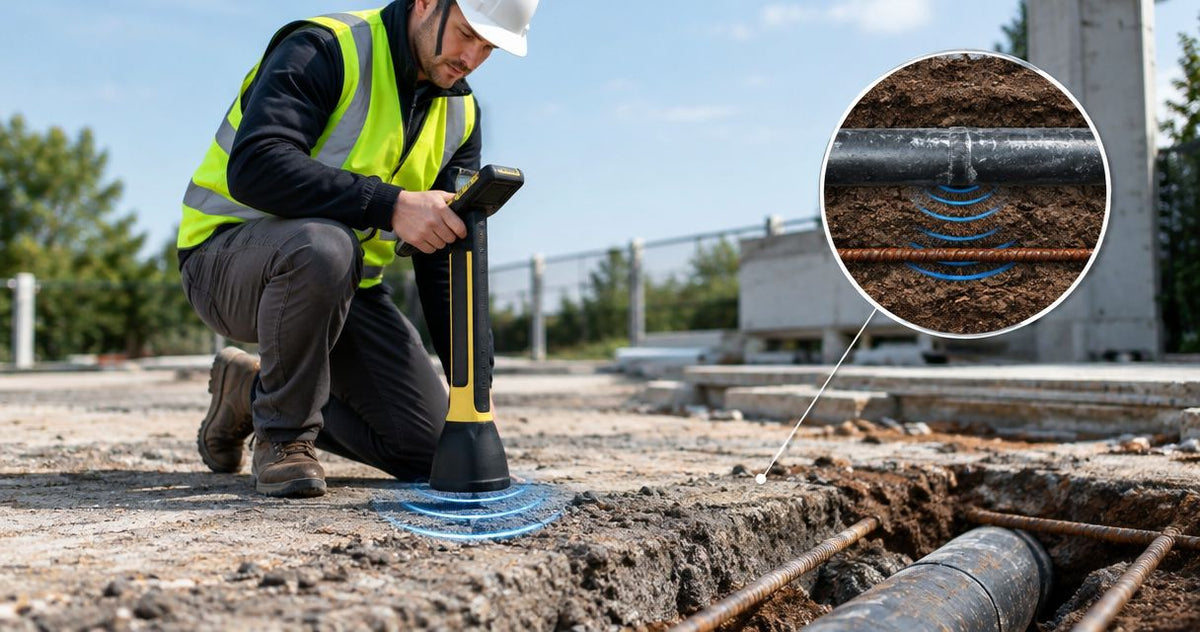
Rebar and metal distort the locating field. Plan how your crew will assess the signal and record the location rather than assigning an exact depth accuracy to every site.
For reporting, specify the required workflow before selecting the recorder or software. NASSCO PACP provides standardized pipeline condition assessment coding; the contract determines the required submission and acceptance format. Review the guide to exporting sewer camera footage into NASSCO PACP reports alongside the owner's specification.
Also assign responsibility for cleaning coordination, file naming, footage review and equipment care. Those tasks connect the field inspection to the maintenance decision the municipality needs to make.
- A pipe crawler is worth it for municipal mainline work when powered travel and recurring inspection requirements justify ownership.
- Fiberscope.net inspection equipment selection starts with access, route, reach and required evidence.
- Compare crawler ownership, rental and subcontracting against the same accepted inspection deliverables.
FAQ
Can a pipe crawler clean a blocked mainline?
A pipe crawler carries inspection equipment through the pipe. Specify cleaning equipment and preparation separately when deposits or obstructions affect travel or visibility.
Can a sewer crawler measure a defect?
Defect measurement depends on the selected camera and measurement capability. Include the required measurement task and acceptance method in the equipment specification.
Can a crawler inspect a lateral from the mainline?
Entering a lateral requires a suitable lateral-launch system. Viewing the connection from the mainline is a separate camera task.
Should the operator enter the manhole to deploy a crawler?
Plan deployment from outside the manhole wherever the equipment and site permit. Any entry requires the employer's applicable confined-space procedures and site assessment.
What should happen when a crawler encounters an obstruction?
Follow the equipment's operating and recovery procedure, and record the inspection endpoint. Assign responsibility for reviewing the obstruction and arranging the next inspection or cleaning step.
Who should review municipal crawler footage?
Assign a reviewer who understands the contract's condition-assessment and reporting requirements. Review the inspection record before submitting it for client acceptance.
Match the configuration to the contract
Send Fiberscope.net your pipe ID, access, run length, bends, pipe material, locating requirement and existing receiver frequency, plus recording and reporting needs. Call 1-877-613-2210 to discuss a configuration matched to the inspection assignment.
Author
Vladimir Khubiryants, Founder & President, Fiberscope.net (MEDIT Inc.)
Vladimir Khubiryants founded Fiberscope.net to give professionals access to reliable video inspection equipment without enterprise pricing. For over 20 years he has sourced and tested borescopes, sewer cameras and fiberscopes in Fiberscope.net's in-house test and repair facility, helping plumbers, pipeline engineers, aviation and military teams choose the right tool for the job.

Leave a comment
This site is protected by hCaptcha and the hCaptcha Privacy Policy and Terms of Service apply.