

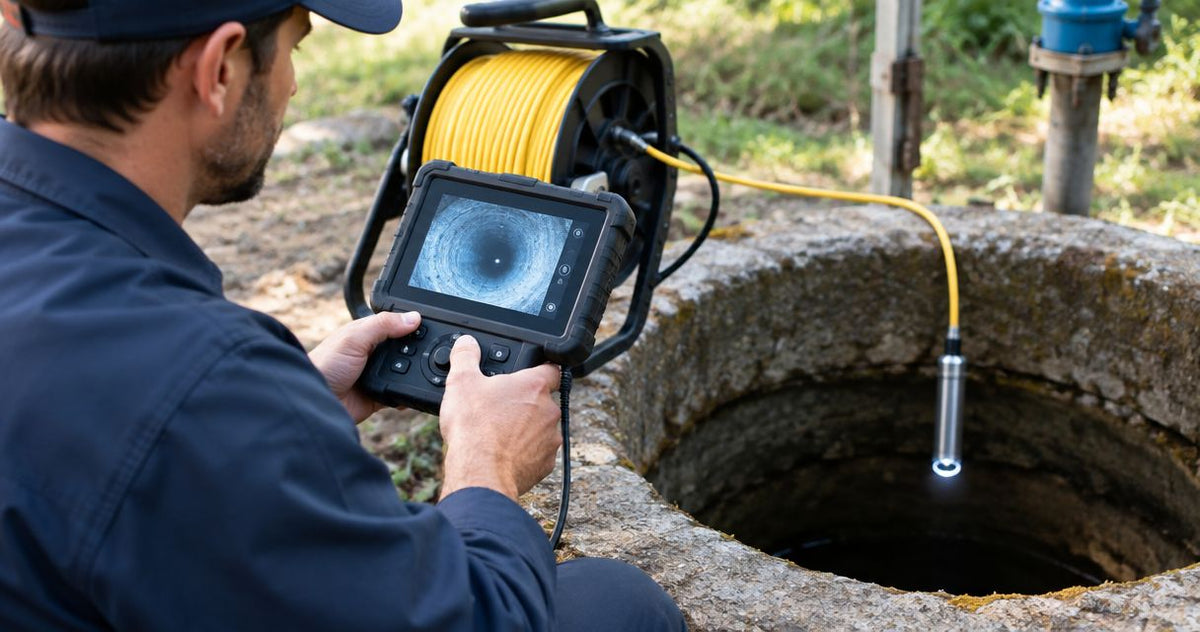
Choosing between well inspection cameras in 2026 comes down to one mechanical difference, not camera-head sharpness: manual reel handling versus motorized winch control. For routine water-well, shaft, and vertical-pipe checks, the STRAHL HD Well Inspection Camera is the practical pick. For deep wells or a schedule with repeat lowering and raising cycles in a single shift, the Motorized Downhole Well Camera STRAHL HD removes the hand-cranking burden.
This guide covers verified well and downhole camera systems sold through the STRAHL HD Well Inspection Camera product line at Fiberscope. It does not cover sewer, drain, or duct cameras — those use horizontal pipe geometry and different deployment hardware. Fiberscope sells the products discussed here. Recommendations are based on current published specifications and stated use cases; confirm final configuration and compatibility with Fiberscope before purchase.
- The STRAHL HD Well Inspection Camera fits routine water-well and shaft checks with a manual reel.
- The Motorized Downhole Well Camera STRAHL HD adds motorized winch control for deep or repeated deployments.
- Best well inspection cameras in 2026 differ mainly by manual reel versus motorized winch, not camera head design.
- Wellhead opening size and cable reach decide fit — confirm both before ordering.
Why this matters
A well camera has to survive going down a narrow, mostly straight vertical bore, often into water, and come back up without the crew guessing at what happened below the surface. That is a different job than snaking a push-camera through a horizontal drain line with 90-degree bends. Pick the wrong camera class in 2026 and you either can't fit the housing through the wellhead or you burn labor hours hand-winding cable on a well deep enough to need power assist.
Water-well and shaft inspection work also tends to be lower-frequency than daily sewer inspection routes. That changes what "best" means here: reliability and correct fit at the wellhead matter more than throughput features.
What decides the right well inspection camera
Work through these before comparing cameras:
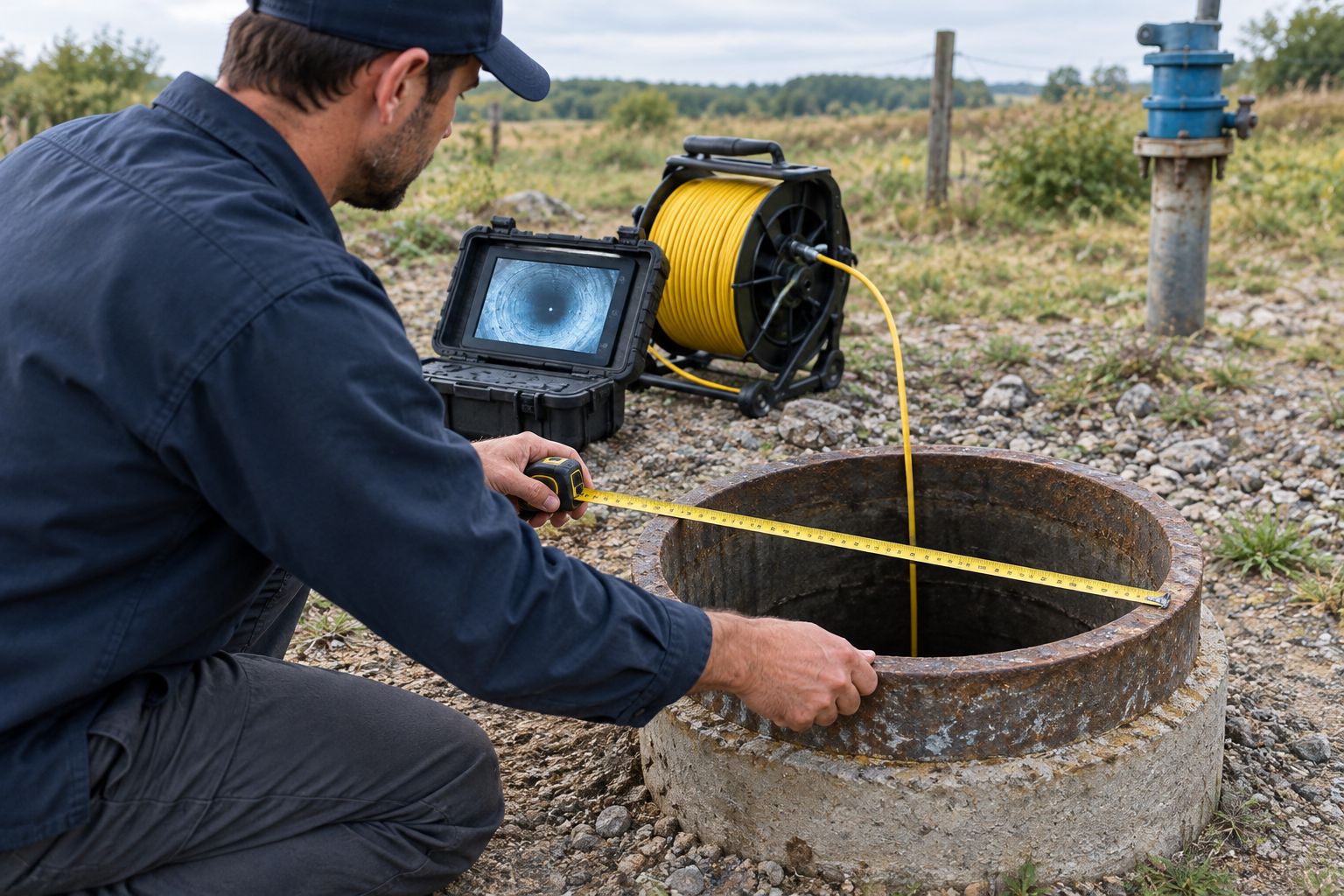
- Wellhead or access opening diameter. Domestic wells commonly run 4-inch or 6-inch casing; municipal and irrigation wells often use 8-inch casing or larger. Measure your actual opening — don't assume from well type.
- Target depth and cable reach. Confirm the camera's published reach against your deepest well, not your average one.
- Environment. Submerged, muddy, or dry-shaft conditions each demand a different housing rating — check the current spec sheet for submersible depth rating.
- Deployment method. Manual reel versus motorized winch changes labor per inspection, not image quality.
- Evidence needed. Decide if you need recorded footage with depth reference before you buy, not after.
- Service frequency. One-off inspections tolerate manual handling; daily or weekly well work usually doesn't.
Well inspection cameras compared at a glance
| Camera | Best for | Standout feature | Key limitation |
|---|---|---|---|
| STRAHL HD Well Inspection Camera | Routine water-well, shaft, and vertical-pipe checks | Compact housing built for reservoirs, shafts, vertical pipes, wells, and tanks | Manual reel — operator controls unwind and wind speed by hand |
| Motorized Downhole Well Camera STRAHL HD | Deep wells and repeat deployments in one shift | Motorized winch controls unwinding and winding | Winch mechanism adds bulk versus the manual reel version |
1. STRAHL HD Well Inspection Camera: best for routine water-well and shaft inspection
The STRAHL HD Well Inspection Camera is built as a compact well camera for inspecting reservoirs, shafts, vertical pipes, water wells, and tanks. Deployment is manual — the operator feeds and retrieves cable by hand, which is normal for a well camera in this class and not a defect specific to this unit.
STRAHL HD Well Inspection Camera pros:
- Compact housing sized for narrow wellhead openings
- Suited to a broad range of vertical-inspection jobs beyond wells: shafts, tanks, reservoirs
- No motorized components to service or troubleshoot
STRAHL HD Well Inspection Camera cons:
- Manual reel means the operator manages cable speed by hand on every run
- Repeated lowering and raising over a full shift adds labor time versus a motorized unit
This is the right default for a plumbing or water-utility crew running occasional well and shaft checks where wellhead access is tight. Confirm the current housing diameter, cable reach, and submersible rating on the product page against your specific wellhead and target depth before ordering — those figures are configuration-dependent.
2. Motorized Downhole Well Camera STRAHL HD: best for deep wells and repeat deployments
The Motorized Downhole Well Camera STRAHL HD is the enhanced version of the same platform, with a motorized winch that controls the unwinding and winding process instead of leaving that to the operator's hands. It is not a self-propelled crawler — the winch manages cable feed at the surface, it does not drive the camera head through a pipe.
Motorized Downhole Well Camera STRAHL HD pros:
- Motorized winch reduces hand fatigue on deep wells or long shifts
- Consistent cable speed control on repeat deployments
Motorized Downhole Well Camera STRAHL HD cons:
- Added winch hardware increases the unit's footprint versus the manual STRAHL HD
- Not a fit if your wells are shallow enough that manual handling is quick and infrequent
This is the better choice when a crew is lowering and raising the camera multiple times in a shift, or when well depth makes hand-winding cable impractical. Verify the motorized winch's current published depth capacity and housing dimensions before ordering, since a deeper target well changes cable and reel requirements.
When a well camera isn't the right tool
A well camera is built for a mostly straight vertical bore. If the actual job is a horizontal sewer lateral or mainline with bends and traps, a well camera housing and manual reel won't do the work — that calls for a push-camera or crawler system built for pipe geometry, covered in the sewer inspection camera guide.
Similarly, if the target is an air duct or shaft rather than a water well, the deployment method and head size differ enough that a well camera is the wrong purchase — see the HVAC duct inspection camera guide instead.


How this ranking was built
The split above follows the decision-gate criteria, not a feature scorecard: wellhead opening, depth, environment, and deployment method. Both cameras share the same core platform and job scope — vertical wells, shafts, and tanks — so the deciding factor is whether your crew's depth and repeat-deployment pattern justify the motorized winch. Fiberscope sells the products discussed; treat this as a starting point for configuration, then confirm exact specifications before purchase.
Which well inspection camera should you choose?
For most water-utility, plumbing, and irrigation crews doing occasional well or shaft checks in 2026, the STRAHL HD Well Inspection Camera is the default buy — it fits narrow wellheads and covers reservoirs, tanks, and vertical pipes without added hardware. If your wells run deep or your crew is lowering and raising the camera several times in a single shift, the Motorized Downhole Well Camera STRAHL HD is worth the added footprint for the winch control alone. Neither is the right pick for a horizontal sewer lateral or an HVAC duct — route those jobs to the guides above instead.
FAQ
What's the difference between a well inspection camera and a sewer camera?
A well inspection camera is built for a mostly straight vertical bore — wells, shafts, tanks — while a sewer camera is built for horizontal pipe runs with bends and traps. The housing shape, reel setup, and deployment method differ between the two.
Is the STRAHL HD Well Inspection Camera submersible?
Check the current product page for the submersible rating on your selected configuration before assuming it can be used in standing water; that spec is configuration-dependent and should be confirmed before purchase.
How deep can a well inspection camera go?
Cable reach varies by the exact unit and configuration ordered. Confirm the published reach for the specific STRAHL HD variant against your deepest well before buying.
Do well inspection cameras need a motorized winch?
Not for occasional, shallow inspections — a manual reel handles those fine. A motorized winch earns its place when a crew is running deep wells or multiple deployments in one shift.
What size wellhead opening does a well camera need?
Domestic wells commonly use 4-inch or 6-inch casing, while municipal or irrigation wells often run 8-inch casing or larger. Measure your actual wellhead opening and compare it to the camera's published housing diameter before ordering.
Can a well inspection camera be used in a shaft or tank instead of a well?
Yes — the STRAHL HD Well Inspection Camera is built for reservoirs, shafts, vertical pipes, water wells, and tanks, not wells exclusively.
Are well inspection cameras available to rent instead of buying?
Fiberscope offers both sales and rental on inspection cameras, so a low-frequency well job doesn't necessarily require a purchase.
Does a well inspection camera include a locator or sonde?
That depends on the exact configuration ordered. Confirm sonde and locating capability on the product page rather than assuming it's included, since well depth is usually already known from the wellhead rather than located remotely.
One last thing
Most buried-pipe camera guides spend a section on sonde and locator frequency because the pipe's position underground is unknown. A well camera skips that problem entirely — you already know the well's location and depth from the wellhead, so the harder variable is almost always the casing opening, not the camera's electronics. Measure that opening before you compare anything else in 2026.

Leave a comment
This site is protected by hCaptcha and the hCaptcha Privacy Policy and Terms of Service apply.