

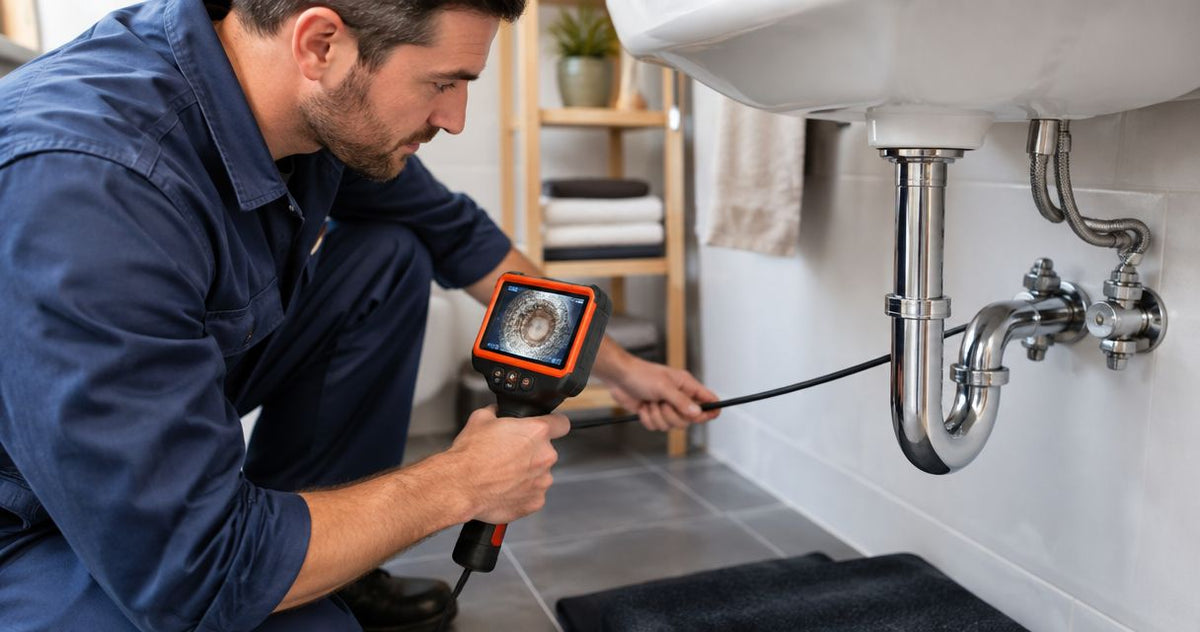
The best portable inspection cameras for plumbers in 2026 aren't a single winner — they split by job type: push-camera systems like the Miniflex plumbing inspection camera for in-pipe branch and lateral work, pan-and-tilt pole cameras for access-point viewing, and locator-equipped push cameras for buried-line jobs that need a trace. Which one fits your crew depends on the access opening, pipe internal diameter, route length, and whether you need to locate a defect from above ground. This guide compares five current Fiberscope camera options for 2026 plumbing work, plus three adjacent systems worth ruling in or out first. Fiberscope sells the products discussed. Recommendations are based on current published specifications and stated use cases; confirm final configuration and compatibility with Fiberscope before purchase.
- Best portable inspection cameras for plumbers in 2026 split by job: push-camera, pole camera, or locator-equipped system.
- Miniflex and iSnake push-camera systems fit compact branch and lateral drain lines from typical cleanouts.
- SnapTrack pairs a sonde/transmitter with a compatible locator receiver for buried-line tracing; confirm frequency match first.
- Cobra Dual-View pole camera suits access-point viewing, not multi-bend in-pipe travel.
- None of these are self-propelled crawlers; verify pipe diameter and route length with Fiberscope before ordering.
Why the equipment class matters more than the brand
A plumbing crew that orders a camera by feature list instead of job conditions usually finds out the hard way: the head clears the cleanout but sticks at a smaller downstream fitting, or the reel reaches the defect but nobody in the truck owns a locator receiver that matches the sonde's frequency. Neither problem shows up in a spec sheet skim.
The cameras compared below fall into three distinct equipment classes: push-camera systems advanced by hand on a cable, a pan-and-tilt pole camera for access-point viewing, and a push-camera fitted with a sonde/transmitter for locating work. None of them are self-propelled crawlers — a crawler has powered wheels or tracks, and that's a separate product class Fiberscope does not verify in this guide.
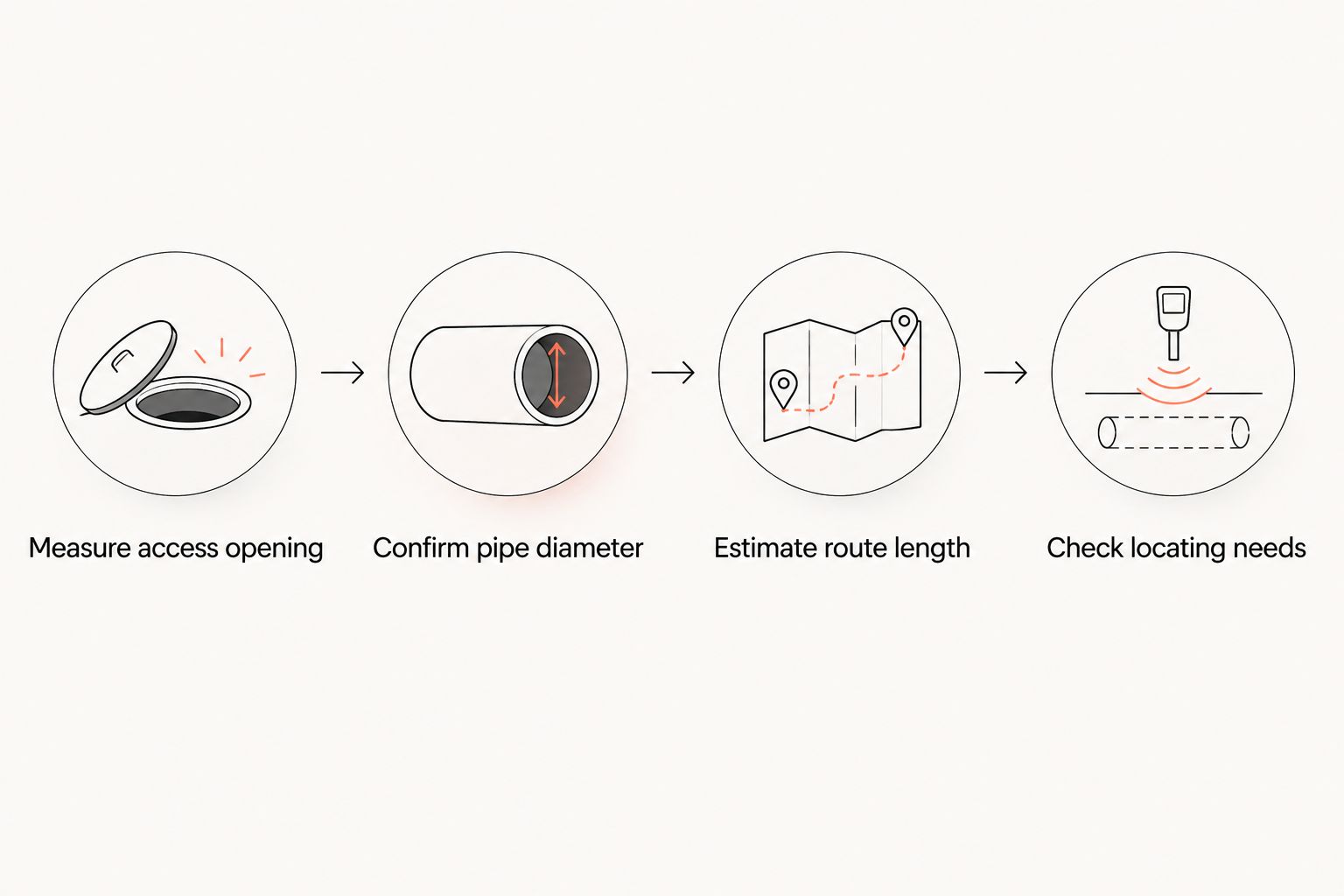
Job conditions to check before you shortlist a camera
- Access opening — the cleanout, trap, or vent size the camera head and cable must physically pass through.
- Pipe internal diameter — the smallest ID along the run; a head that clears the access opening can still stall at a smaller fitting downstream.
- Route length — total footage from entry point to the area you need to inspect, not straight-line distance.
- Bends and trap geometry — 90-degree turns and P-traps limit which cable stiffness will pass without buckling.
- Environment — standing water, grease, or gas-line proximity change sealing and lighting requirements.
- Deployment method — hand-fed push cable, pole-mounted head, or a rolling skid that centers a camera in larger pipe.
- Evidence and locating needs — whether the job requires a recorded video file, a printed report, or an above-ground location of a defect.
- Existing equipment — a control base, monitor, or locator receiver you already own may set which reels or heads are usable.
- Service and support — availability of repair parts and technical support for the exact model you select.
What makes a good portable inspection camera for plumbing work
- Push-cable stiffness and bend tolerance — determines whether the head passes multiple 90-degree turns without buckling.
- Image quality and self-lighting — LED output and sensor resolution decide whether hairline cracks or root intrusion actually show up in a dark pipe.
- Sealing and durability — an IP-rated head and cable jacket holds up to standing water and grease over repeated calls.
- Recording and reporting — onboard recording or a control base that exports video and photos for a customer-facing report.
- Locating compatibility — a documented sonde/transmitter frequency that matches a receiver already on the truck.
- Portability and setup time — reel size, case weight, and how fast the system powers up on a service call.
At a glance: portable camera options for plumbing work in 2026
| Camera | Equipment class | Best fit | Not ideal for |
|---|---|---|---|
| Miniflex plumbing inspection camera | Push-camera, flexible cable | Compact branch and lateral lines from a standard cleanout | Long mainline runs or jobs needing a locator trace |
| iSnake Drain Camera | Push-camera, small-diameter | Tight-access residential drains limited by head size | Runs needing extended reach beyond a compact reel |
| Viper Mid Drain Camera | Push-camera, mid-size | Mid-size drain runs needing more reach than a compact reel | Very small diameter branch lines |
| Cobra Dual-View Inspection Pole Camera | Pan-and-tilt pole camera | Access-point and above-ground viewing tasks | In-pipe travel through multiple bends |
| SnapTrack Sewer Camera Sonde Locator | Push-camera with sonde/transmitter | Buried-line locating jobs, with a compatible receiver on hand | Crews without a matching locator receiver |
1. Miniflex plumbing inspection camera: best for compact branch and lateral lines
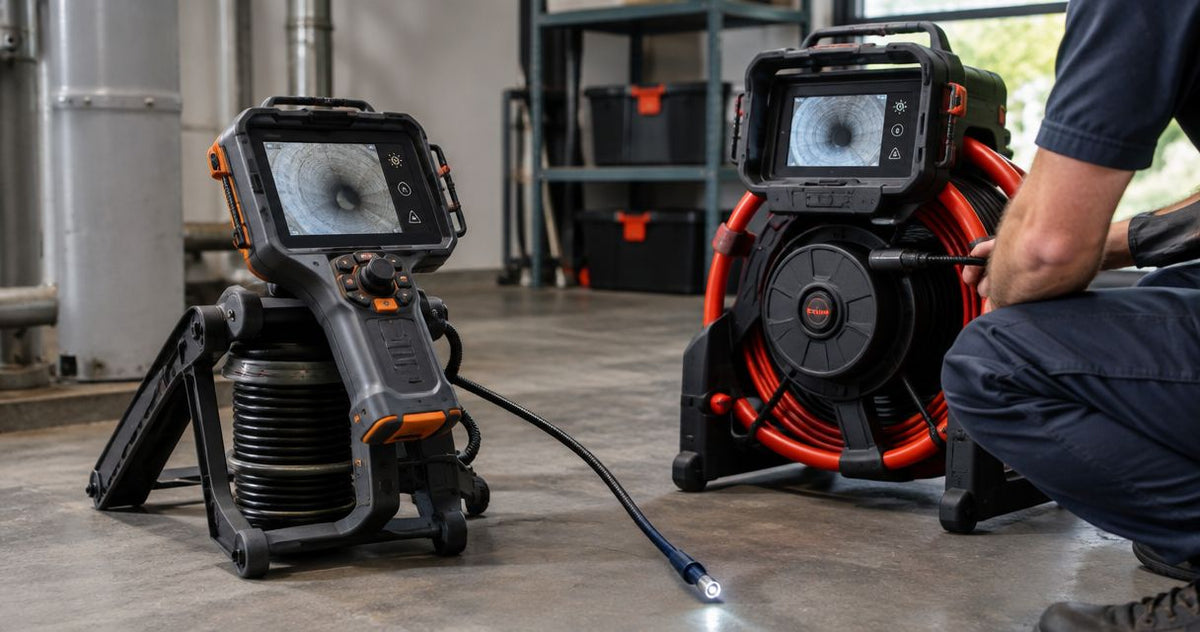
The Miniflex plumbing inspection camera is a push-camera system: a camera head advanced by hand on a coiled cable, not a self-propelled crawler. It's built for the compact branch and lateral drain calls that make up most day-to-day residential and light-commercial plumbing work.
For a crew whose calls mostly start at a single cleanout, this is the class of system to shortlist first. Best fit: compact branch and lateral drain lines reached from one access point. Verify before purchase: exact reel length, head outside diameter, and minimum pipe ID for the configuration you need. Not ideal for: long mainline runs, or any job that also needs a buried-line trace.
2. iSnake Drain Camera: best for tight-access residential drains
The iSnake Drain Camera is positioned as a small-diameter push-camera, which matters when the limiting factor is the access opening itself rather than the pipe run length. That makes it a candidate for lines where a larger head simply won't pass the trap.
Best fit: tight-access residential drains where head diameter, not reach, is the constraint. Verify before purchase: confirm the head's outside diameter against your smallest access point and the minimum pipe ID it's rated for. Not ideal for: runs that need extended reach beyond a compact reel — that's a job for a mid-size system instead.
3. Viper Mid Drain Camera: best for runs that outgrow a compact reel
Viper Mid Drain Camera sits between compact residential systems and full mainline equipment, which suits drain runs that need more cable than a Miniflex-class reel offers without stepping up to municipal-grade gear. This is the practical middle option when a compact system falls short but a mainline system is overkill.
Best fit: mid-size drain runs needing more reach than a compact reel provides. Not ideal for: very small diameter branch lines, where a slimmer head clears fittings more reliably.
4. Cobra Dual-View Inspection Pole Camera: best for access-point viewing
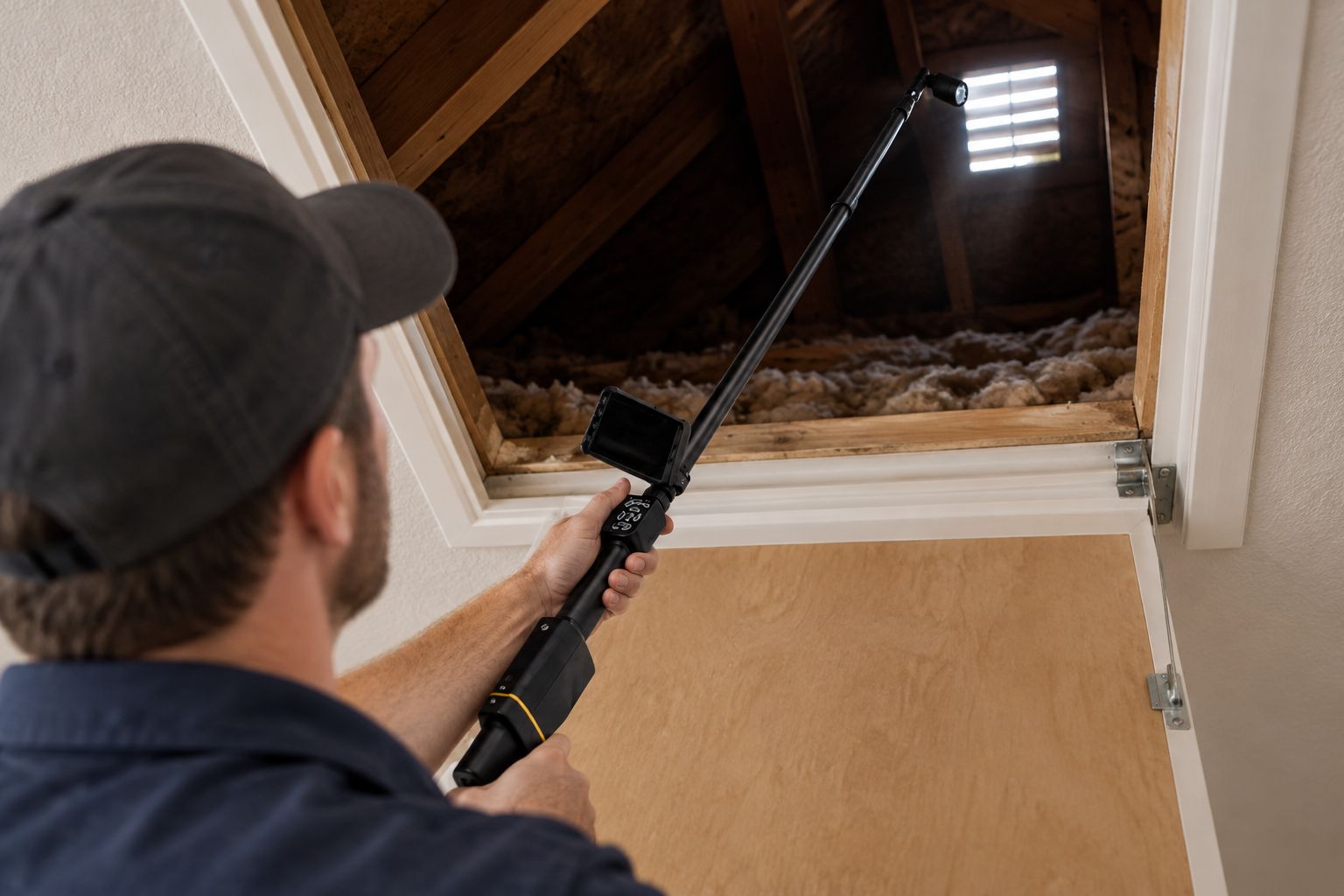
The Cobra Dual-View Inspection Pole Camera is a pole-mounted camera, not an in-pipe push-camera. Pan-and-tilt or dual-view capability describes viewing direction only — it says nothing about pipe range, propulsion, or bend tolerance, and it doesn't turn a pole camera into a drain camera.
Best fit: access-point and above-ground viewing tasks — attics, tanks, crawlspaces, panel interiors — where extending a pole to the area is faster than routing cable through a pipe. Verify before purchase: pole reach and head articulation against the access points your crew actually works. Not ideal for: in-pipe travel through multiple bends; a pole camera views from an access point, it doesn't advance through the run itself.
5. SnapTrack Sewer Camera Sonde Locator: best for buried-line locating
The SnapTrack Sewer Camera Sonde Locator pairs a push-camera with a sonde/transmitter in the head. A transmitter sends a signal at a specific frequency; a separate handheld locator receiver tuned to that frequency finds the position from above ground. The transmitter and the receiver are two different components, and they only work together when their frequencies match.
Best fit: jobs that require locating a buried defect or a cleanout position, provided a compatible locator receiver is already part of the kit. Verify before purchase: confirm the transmitter's frequency against your locator receiver's supported frequencies — a receiver mode alone doesn't prove a camera transmits at that frequency. Not ideal for: crews without a matching receiver, since a sonde by itself doesn't locate anything.
“A receiver mode alone doesn't prove a camera transmits at that frequency.”
Equipment this guide doesn't recommend for a first plumbing camera
Self-propelled crawlers and tractor systems are excluded here because a powered-travel product needs its own verified guide — none of the systems compared above have documented motorized traction, and calling any of them a crawler would misstate what they do. Rigid borescopes and IP-rated endoscope cameras solve a different problem: they're built for small mechanical components like valves and fittings, not for traveling through a drain run.
Passive rolling skids — the kind that lift or center a camera head in larger pipe — can pair with some of the systems above, but compatibility depends on documented head diameter and mounting interface, not on labels like universal or small. Confirm any skid pairing with Fiberscope before ordering rather than assuming fit from the name.
Access-point and mainline options beyond the branch line
Three more Fiberscope systems come up in plumbing conversations, though they belong to different equipment classes than the push-cameras above. The Pole Inspection Camera CYCLOPS HD is a telescopic pole camera built for tanks, bins, attics, and sewer mainlines viewed from an access point — it doesn't advance through a pipe run the way a push-camera does.
The Mainline Inspection Zoom Camera CYCLOPS TZ is built for culverts, mainlines, and storm drains — larger-diameter, municipal-adjacent work most residential plumbing crews won't run into on a typical week. The Well Inspection Camera STRAHL HD is a compact well camera for reservoirs, shafts, vertical pipes, water wells, and tanks — relevant only if your crew also handles well work; it's not a drain-line tool.


How this list was put together
Each system above is placed by documented equipment class and stated use case from current Fiberscope product pages, not by feature count. Push-camera systems are compared against push-camera systems; the pole camera, mainline zoom camera, and well camera are called out separately because they solve a different access problem, not ranked against a drain camera on the same table.
Which portable inspection camera should you pick for 2026
For routine branch and lateral calls, a push-camera system in the Miniflex or iSnake class covers most of the work a plumbing crew sees in 2026. Step up to Viper Mid when runs outgrow a compact reel, add the SnapTrack sonde-equipped configuration once locating buried defects becomes routine, and keep a pole camera on the truck for access-point jobs a push-cable can't reach.
Confirm exact pipe range, reel length, head diameter, and locator frequency with Fiberscope before you order. Send over the access opening, pipe internal diameter, route length, bend geometry, and locating requirement for the job, and the configuration — not the brand name — decides what fits.
FAQ
What's the best portable inspection camera for plumbers in 2026?
There's no single best model. A push-camera system like Miniflex or iSnake covers compact branch and lateral lines, while a pole camera or a sonde-equipped system like SnapTrack fits access-point viewing or buried-line locating. Match the equipment class to the job before comparing brands.
What's the difference between a push-camera and a self-propelled crawler?
A push-camera is advanced by hand on a cable; a self-propelled crawler has powered wheels or tracks that drive it forward on their own. None of the systems compared in this guide are self-propelled crawlers, they're push-camera or pole-camera systems.
What pipe diameter can a push-camera system inspect?
Push-camera systems marketed for plumbing work generally cover a range of branch and lateral pipe diameters, with the minimum ID limited by the camera head's outside diameter. The exact range varies by model and configuration, so confirm it against your smallest access point before buying.
How do plumbers locate a buried pipe defect found on camera?
A camera head fitted with a sonde or transmitter emits a signal at a specific frequency, and a separate handheld locator receiver tuned to that frequency finds the position from above ground. The transmitter and receiver only work together when their frequencies match, so confirm compatibility before pairing them.
Is a pan-and-tilt camera the same as a pipe crawler?
No. Pan-and-tilt describes the camera head's ability to change viewing direction, not how the system travels. A pan-and-tilt head can sit on a push-camera, a pole camera, or a crawler, and by itself says nothing about pipe range or propulsion.
Do portable drain cameras record video for customer reports?
Most current push-camera and pole-camera control bases support onboard recording or export to a file for customer-facing reports, though the exact recording format and storage method vary by model. Confirm the recording and export method for the specific system before assuming it meets a reporting requirement.
One last thing
A sonde/transmitter and a locator receiver are sold and priced as separate pieces of equipment in most configurations. Buying a camera with a built-in transmitter doesn't put a receiver in the truck — confirm both pieces are actually in the order before the job that needs locating shows up on the schedule.

Leave a comment
This site is protected by hCaptcha and the hCaptcha Privacy Policy and Terms of Service apply.