

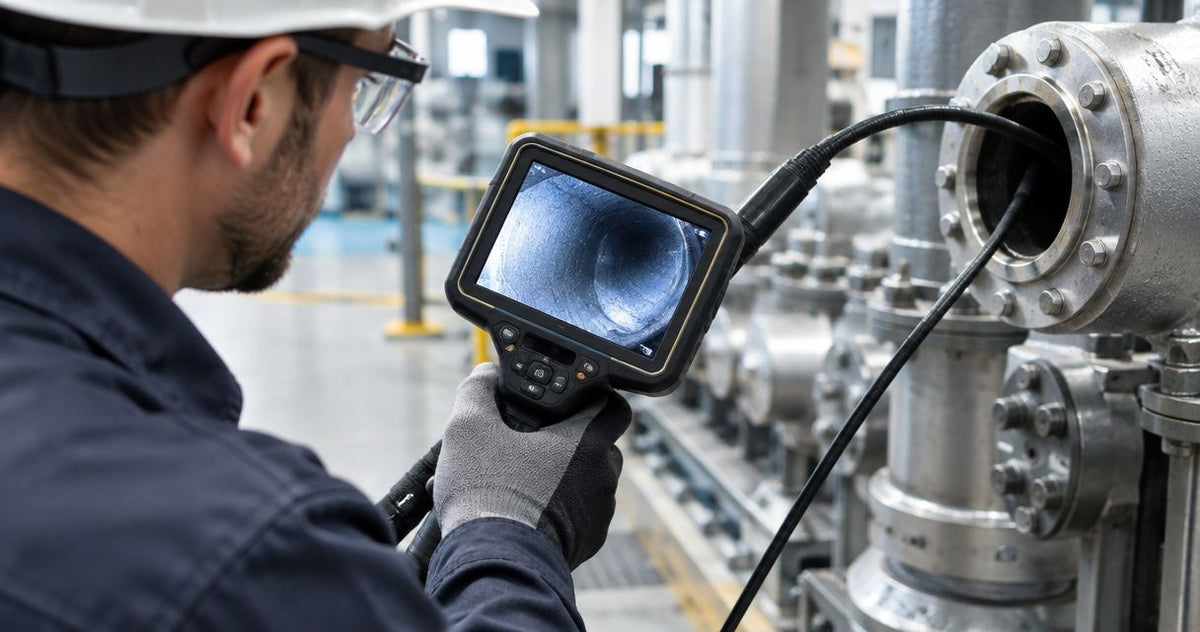
A maintenance crew opens an inspection port on a gearbox, a pump casing or a heat exchanger header and finds a cavity the size of a fist with one 0.5-inch opening. A straight rigid scope sees the wall opposite the hole and nothing else. A videoscope with an articulating tip bends the camera 90° or more inside the cavity, so the weld, the bearing race or the fouled tube sheet ends up on screen without a teardown. This guide matches videoscopes to the access opening, route, heat and evidence a maintenance job needs.
The short answer: the Videoscope VOYAGER M40 (from $4,160) is the all-round pick with 360° joystick articulation. The VOYAGER C40 covers hot environments, the C35 covers dark bores with infrared illumination, and the MICRON is the choice when the opening is too small for anything articulating. Fiberscope.net sells the products discussed here and services them in-house.
- Best overall videoscope for industrial maintenance: VOYAGER M40, 360° all-way joystick articulation and IP68 probes.
- Hot environments: VOYAGER C40 high-temperature videoscope with 4-way articulation on 3–16 ft (1–5 m) probes.
- Dark bores and cavities: C35 Infrared Tactical Borescope uses IR illumination, not thermal imaging.
- Smallest ports with no articulation: MICRON micro video borescope with USB 3.0 and HDMI output.
How to choose a videoscope for maintenance
A videoscope is a flexible probe with a camera at the tip, steered from the handle by a joystick or control that bends the tip. A fiberscope carries the image back through a coherent fiber bundle instead, and its image quality is set by the pixel count of that bundle. For most maintenance work the camera-at-the-tip design gives the cleaner, recordable picture.
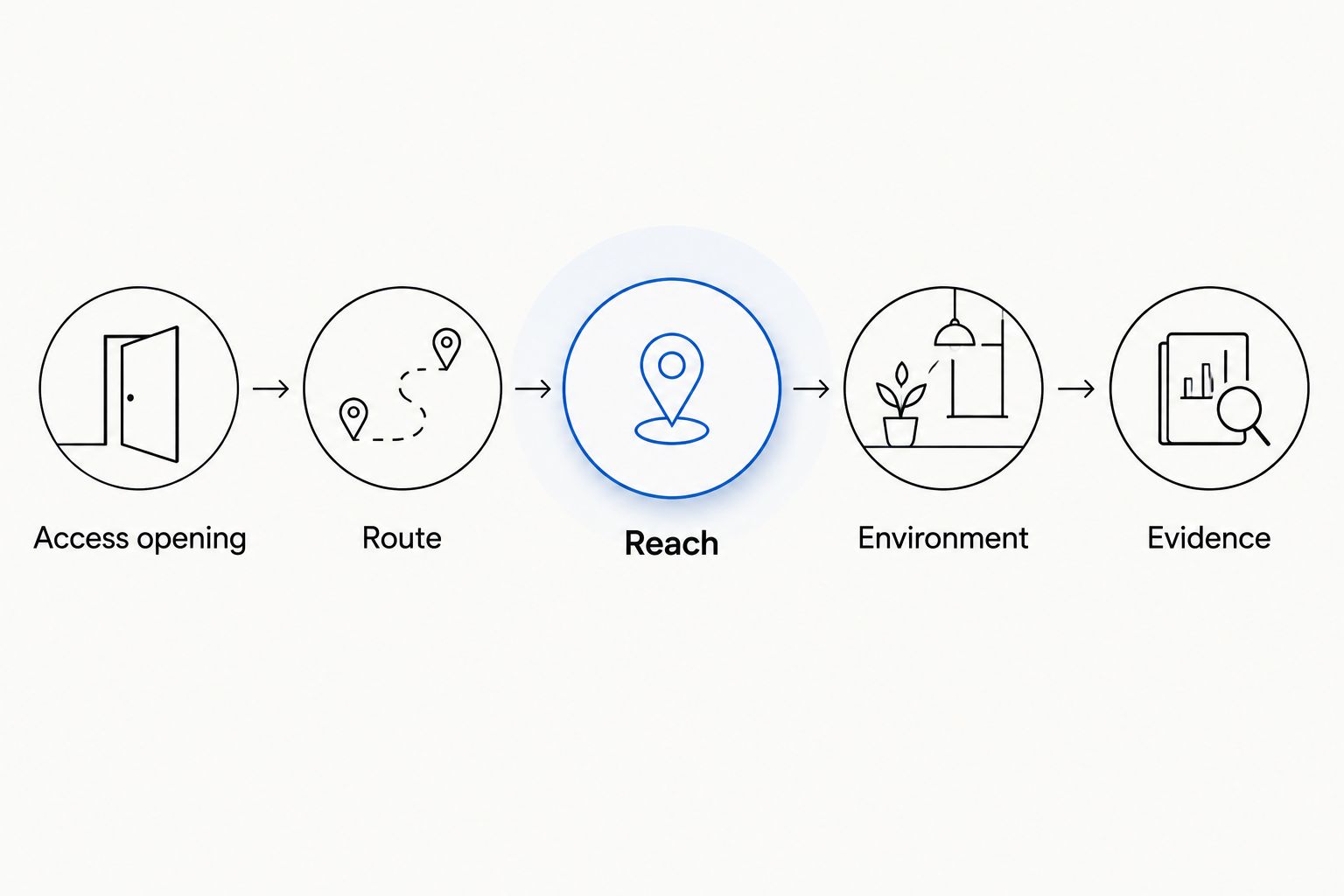
Five constraints decide the purchase, in this order:
- Access opening. The probe outer diameter (OD) must clear the smallest hole or fitting on the route, whatever the spec sheet says about the head.
- Route. A straight run needs no articulation. A route with a turn, such as a borescope port behind a baffle, needs a tip that bends and holds position.
- Reach. Working length is the distance the probe can be pushed in. Measure from the port to the farthest target, then add the bends.
- Environment. Heat, moisture and oil each limit which probe survives. An IP68 rating covers immersion beyond 1 m under the maker's stated conditions; IP67 covers temporary immersion to 1 m for 30 minutes (see IEC 60529).
- Evidence. If the finding goes into a work order or an NDT report, you need recording, not just a live view.
The best industrial borescopes guide covers the wider category, including rigid scopes.
Videoscopes at a glance
Price checked September 29. Specs below come from each product page; a dash means the item does not apply to that product.
| Videoscope | Best for | Articulation | Environment rating | Main limit |
|---|---|---|---|---|
| VOYAGER M40 | General maintenance, tight cavities | 360° all-way joystick | IP68 probes | Not the pick for sustained high heat |
| VOYAGER C40 | High-temperature inspection | 4-way on 3–16 ft (1–5 m) probes; 2-way on 20–26 ft (6–8 m) probes | Built for high temperature | Long probes steer in two directions only |
| C35 Infrared Tactical | Dark bores and cavities | Mechanical all-way | — | IR illumination, not a thermal camera |
| MICRON | Smallest ports, USB or HDMI viewing | None | — | Cannot steer around a bend |
Videoscope VOYAGER M40: best overall for maintenance
The Videoscope VOYAGER M40, from $4,160, steers its tip through 360° with an all-way joystick, so one probe looks at a bearing, a weld seam and a cavity wall without being withdrawn and reinserted. The probes are rated IP68, which suits oily or damp equipment bays.
It fits plant maintenance, mechanical inspection and general NDT visual checks where the access is tight and the route turns. It is the lowest-priced all-way videoscope we recommend; for measurement-grade aerospace work, see the other options below.
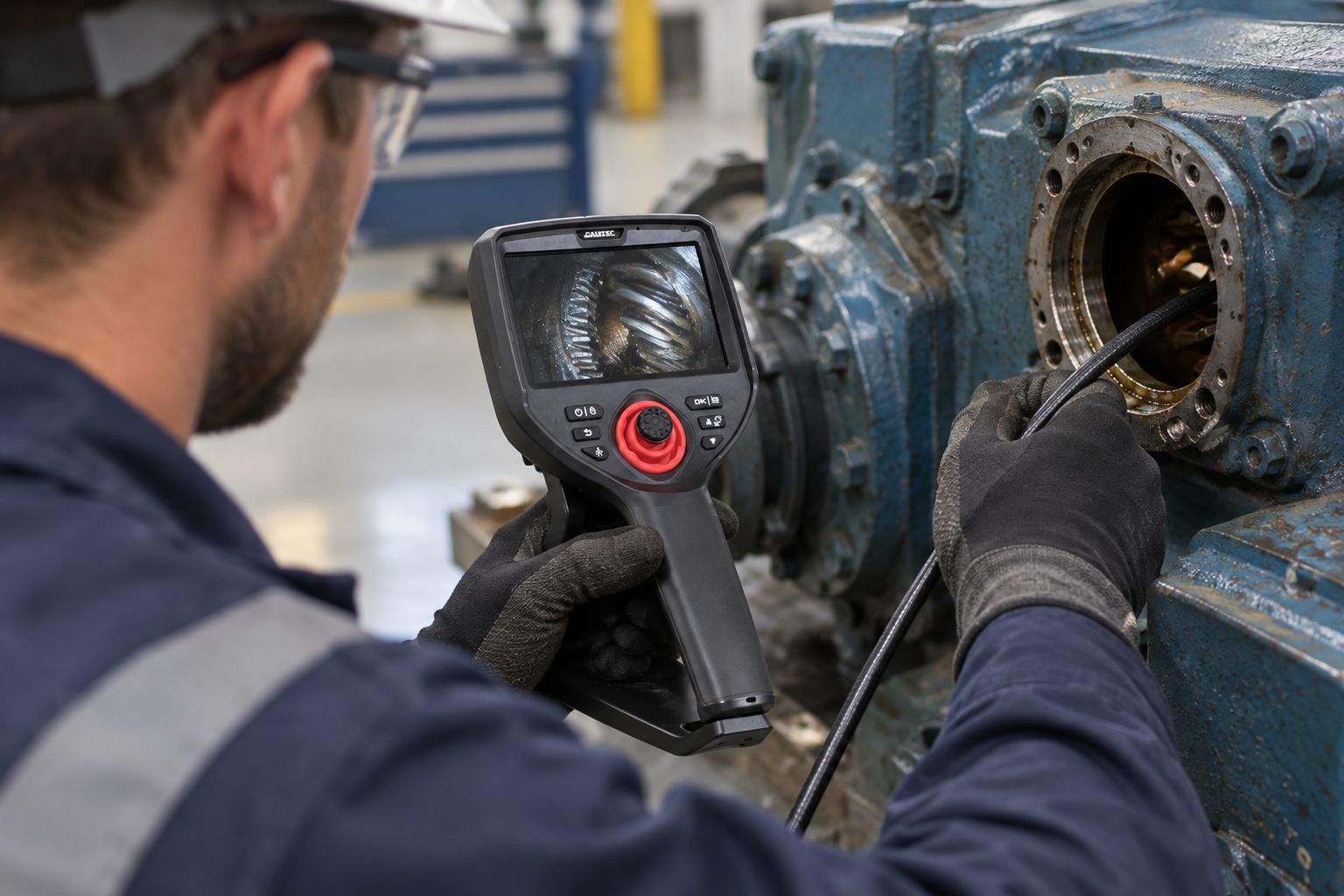
The M40 suits the reader who inspects different machines every week. Buy it when the access holes vary and you want one tool in the case.
VOYAGER C40: hot environments
The High Temperature Borescope Camera VOYAGER C40 is the videoscope for kilns, furnaces, boilers and exhaust-side inspection. Its probes between 3 and 16 ft (1–5 m) articulate in four directions; the longer probes of 20–26 ft (6–8 m) articulate in two. Pick the shorter probe if you need to look around a corner at the end of the run.
The temperature rating sits on the product page and is the figure to check against your process. The high-temperature borescope guide for power plants works through the selection in detail.
The C40 is the right buy for power-plant and process-line crews. It is the wrong buy for a general-purpose kit, where the M40 covers more jobs.
C35 Infrared Tactical Borescope: dark bores
The Infrared Tactical Borescope Camera C35 has mechanical all-way articulation and infrared illumination for low-light visual inspection. That means it lights a dark cavity without visible light. It is not a thermal camera, and it cannot show heat loss or temperature differences.
It suits enclosed cavities where visible light would wash out the image or is not wanted. Choose it for that job; for ordinary maintenance work the M40 is the more flexible tool.
MICRON micro video borescope: smallest ports
The MICRON micro video borescope has no articulation, so it belongs on the list only for openings too small for a steerable probe. It outputs over USB 3.0 to a computer and over HDMI to a display, which makes it a compact way to put a live image on a laptop.
It cannot bend around obstructions. When the route has a turn, move up to the M40. For a view across the whole micro category, see the best articulating borescopes guide.
Other options
The Evident IPLEX series and the Waygate Mentor Visual iQ are the measurement and aerospace reference among industrial videoscopes. If your reports need on-screen measurement to a formal standard, or you inspect turbine blades under an aviation maintenance program, those are the stronger tools. For general plant maintenance, the M40 covers the visual work at a lower cost.
What you'll also need
- A written probe-OD check against the smallest port on each machine before you order.
- A storage and recording routine, so every finding is saved with the asset tag and date.
- For very hot work, a plan for probe cool-down and cleaning after each use.
Common mistakes
- Buying on screen size instead of probe OD. A bigger screen does not get the probe through the port.
- Choosing a two-way articulating probe for a route that needs four-way steering.
- Treating infrared illumination as thermal imaging.
- Skipping the rating check. IP67 and IP68 are not interchangeable for submerged work.
FAQ
What is the difference between a videoscope and a fiberscope?
A videoscope puts the camera at the probe tip. A fiberscope carries the image through a coherent fiber bundle, so image quality depends on the bundle's pixel count.
Which videoscope articulates in every direction?
The VOYAGER M40 steers its tip through 360° with an all-way joystick. The C35 Infrared Tactical Borescope also has mechanical all-way articulation.
Can the C35 find heat loss?
No. The C35 uses infrared illumination to light dark spaces for visual inspection. It is not a thermal camera and cannot show temperature differences.
Does the MICRON articulate?
No. The MICRON is a micro video borescope with USB 3.0 and HDMI output, for small openings on a straight or gently curved route.
What does IP68 mean on a videoscope probe?
IP68 means the part resists immersion beyond 1 m under the manufacturer's stated conditions. IP67 is temporary immersion to 1 m for 30 minutes.
Can I rent a videoscope before buying?
Yes. Fiberscope.net runs a rental program for short jobs, and you can buy or demo the same models.
Get the probe matched to your job
Send us your access opening, route and bends, insertion length, viewing direction, operating environment and recording needs, and a Fiberscope.net specialist will match the right videoscope. Use the contact page or call 1-877-613-2210, Monday to Friday, 8:00–18:00 CST.
About the author. Vladimir Khubiryants, Founder & President, Fiberscope.net (MEDIT Inc.). Vladimir founded Fiberscope.net to give professionals access to reliable video inspection equipment without enterprise pricing. For over 20 years he has sourced and tested borescopes, sewer cameras and fiberscopes in Fiberscope.net's in-house test and repair facility, helping plumbers, pipeline engineers, aviation and military teams choose the right tool for the job. See our cameras in use on YouTube and Instagram.


Leave a comment
This site is protected by hCaptcha and the hCaptcha Privacy Policy and Terms of Service apply.