

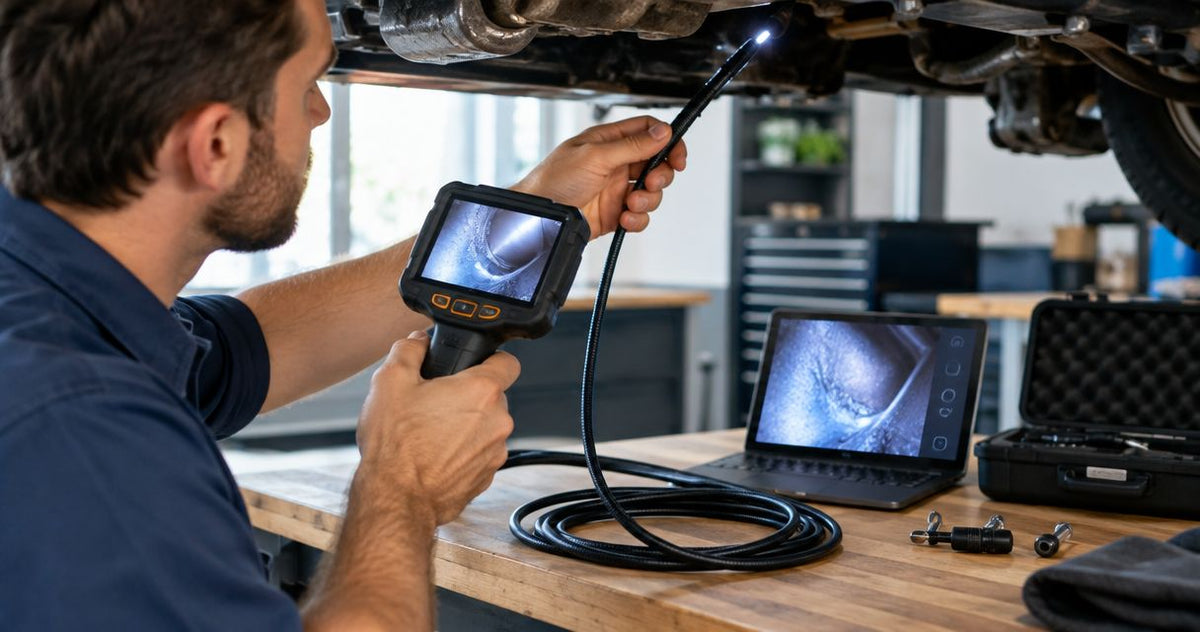
Harbor Freight's borescope earns its shelf space: it's an inexpensive, walk-in-store option for a one-off look behind a dashboard panel or inside a wall cavity. That value holds up right until the job repeats weekly, needs recorded footage for a work order, or calls for a probe, coupler, or light source the sealed unit wasn't built to accept. The best Harbor Freight borescope alternatives in 2026 are the Fiberscope Rigid Borescope for standards-referenced industrial inspection and the Videoscope Voyager M40 HD for recorded HD documentation — with the IP Endoscope Camera as the portable option in between.
This guide compares three Fiberscope borescope systems against the general-purpose consumer unit Harbor Freight sells, by job condition rather than brand loyalty. Fiberscope sells the products discussed. Recommendations are based on current published specifications and stated use cases; confirm final configuration and compatibility with Fiberscope before purchase.
- Harbor Freight borescope alternatives for 2026 start with the Fiberscope Rigid Borescope for standards-referenced industrial inspection.
- The Videoscope Voyager M40 HD adds HD recorded output for filed documentation, which a sealed consumer unit can't produce.
- The IP Endoscope Camera fits repeat field use between a disposable consumer camera and a full industrial rig.
- A video coupler and LED light handle can extend an optical borescope you already own instead of replacing it.
- The Harbor Freight borescope still fits a single, one-off inspection with no downstream documentation need.
Why this matters
A borescope bought for one repair becomes a liability the moment it gets used weekly instead of once. Consumer-grade units sold as sealed, fixed-configuration cameras have no published path to add a coupler, swap a light source, or output footage anyone can file. For plumbing, HVAC, and industrial maintenance work in 2026, that gap shows up as rework: redoing an inspection because nobody can pull the footage, or replacing the entire unit because one fixed part failed.
The decision isn't Harbor Freight versus Fiberscope in the abstract. It's whether the job in front of you needs a fixed, single-use camera or a system built to be reconfigured, recorded, and referenced against a standard.
What decides the right borescope
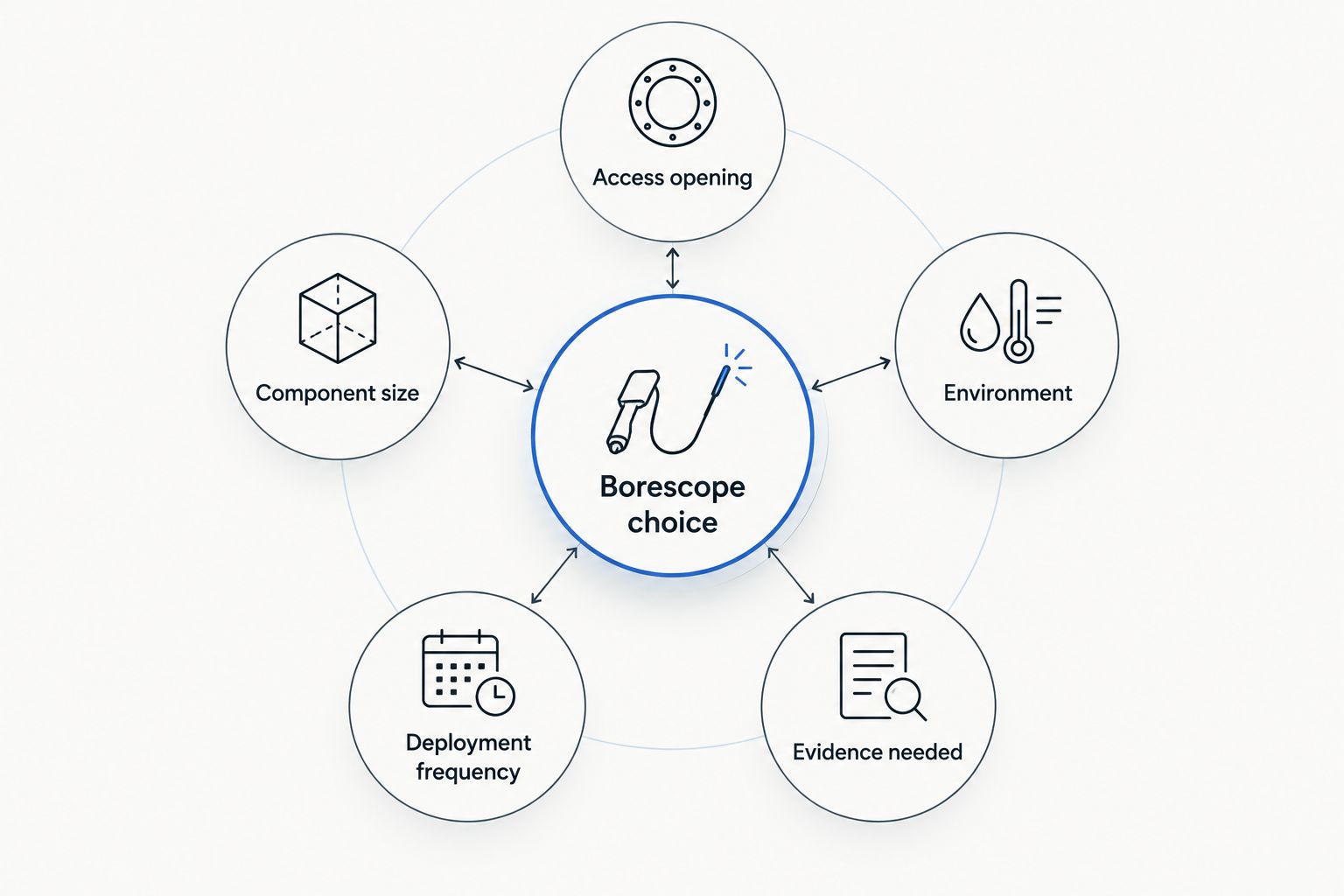
Define the job before comparing units:
- Access opening — a threaded port, an HVAC duct seam, an engine bay gap, or a wall penetration.
- Component or cavity size — the bore, cavity, or gap diameter the probe head has to clear.
- Environment — ambient temperature, moisture exposure, or the need for an IP-rated housing.
- Deployment frequency — a single inspection versus daily rotation through a service fleet.
- Evidence needed — a quick visual reference versus recorded video for a client file or a compliance record.
- Existing equipment — whether you already own an optical borescope that only needs a video coupler and light source, not a full replacement.
Harbor Freight borescope alternatives at a glance
| Tool | Best for | Standout feature | How it differs from Harbor Freight |
|---|---|---|---|
| Harbor Freight Borescope | One-off DIY checks | Low-cost, walk-in availability | Reference point — sealed, fixed-configuration consumer unit |
| Fiberscope Rigid Borescope | Standards-referenced industrial inspection | Manufactured to comply with current industrial-inspection standards | Standards-referenced construction instead of a general consumer camera |
| Fiberscope Videoscope Voyager M40 HD | Recorded HD borescope inspections | HD video output built into the system | Delivers recorded HD footage instead of live-view only |
| Fiberscope IP Endoscope Camera | Portable, repeat field use | Handheld form factor sized for rotation across jobs | Positioned for weekly use, not a single inspection |
1. Fiberscope Rigid Borescope: best for standards-referenced industrial inspection
The Fiberscope Rigid Borescope is manufactured to comply with current industrial-inspection standards rather than sold as a sealed consumer camera. That distinction matters when a client, inspector, or internal quality process asks what tool produced the inspection record, not just what it showed on screen. It pairs with a separate video coupler when a video feed and recorded output become part of the job.
Choose the Rigid Borescope when the inspection record has to reference an actual borescope built to a published standard, not a sealed consumer camera.
- Best fit: facilities and industrial maintenance teams that need a borescope built to current standards, not a hobby-grade unit.
- Verify before purchase: confirm the rigid probe length and diameter against your exact access opening and component size with Fiberscope before ordering — rigid construction won't follow a curved path.
- Not ideal for: routes with multiple bends; a rigid shaft can't articulate the way a flexible fiberscope can.
| Dimension | Fiberscope Rigid Borescope | Harbor Freight Borescope |
|---|---|---|
| Construction reference | Manufactured to comply with published industrial standards | General consumer-grade, no published standards reference |
| Probe style | Rigid shaft | Fixed consumer probe, no rigid/flexible option |
| Accessory path | Compatible with separate video couplers and LED light handles | Sold as a single fixed-configuration unit |
| Typical use pattern | Repeated industrial and facility inspection | Occasional home or garage use |
2. Fiberscope Videoscope Voyager M40 HD: best for recorded HD documentation
When the deliverable is footage — a work order, a before-and-after record, or a file handed to a client — the Videoscope Voyager M40 HD builds HD video output into the system instead of a live-view-only display. That's the gap a fixed consumer borescope can't close: there's no upgrade path from live view to recorded HD on a sealed unit.
Choose the Voyager M40 HD when someone downstream needs to watch or file the recorded inspection, not just hear about it.
- Best fit: technicians who need to hand off recorded HD footage as part of the job, not just complete a visual check.
- Verify before purchase: confirm probe length and connector compatibility with your monitor or recording workflow with Fiberscope before ordering.
- Not ideal for: a single quick look where nobody downstream reviews the footage — a simpler unit costs less to manage in that case.
| Dimension | Videoscope Voyager M40 HD | Harbor Freight Borescope |
|---|---|---|
| Output | HD recorded video | Live view, no standard recording path |
| Documentation use | Built for filed inspection records | Not positioned for compliance or client documentation |
| Configuration | Configurable HD videoscope system | Fixed, non-configurable unit |
3. Fiberscope IP Endoscope Camera: best for portable, repeat-use inspection
The IP Endoscope Camera sits between a disposable consumer unit and a full industrial rig — sized for a technician who needs a borescope in the truck every week, not once a year. It's the option to check when the Rigid Borescope's standards-referenced construction is more than the job calls for, but a one-time consumer camera won't hold up to weekly rotation.
- Best fit: field technicians running a borescope across multiple jobs per week rather than a single repair.
- Verify before purchase: confirm the exact probe diameter and cable length against your access opening and route length with Fiberscope — a product page alone doesn't replace a configuration check.
- Not ideal for: jobs that require a filed HD record for a client — pair with the Videoscope Voyager M40 HD instead when documentation is the priority.
Accessories that close the gap without a new borescope
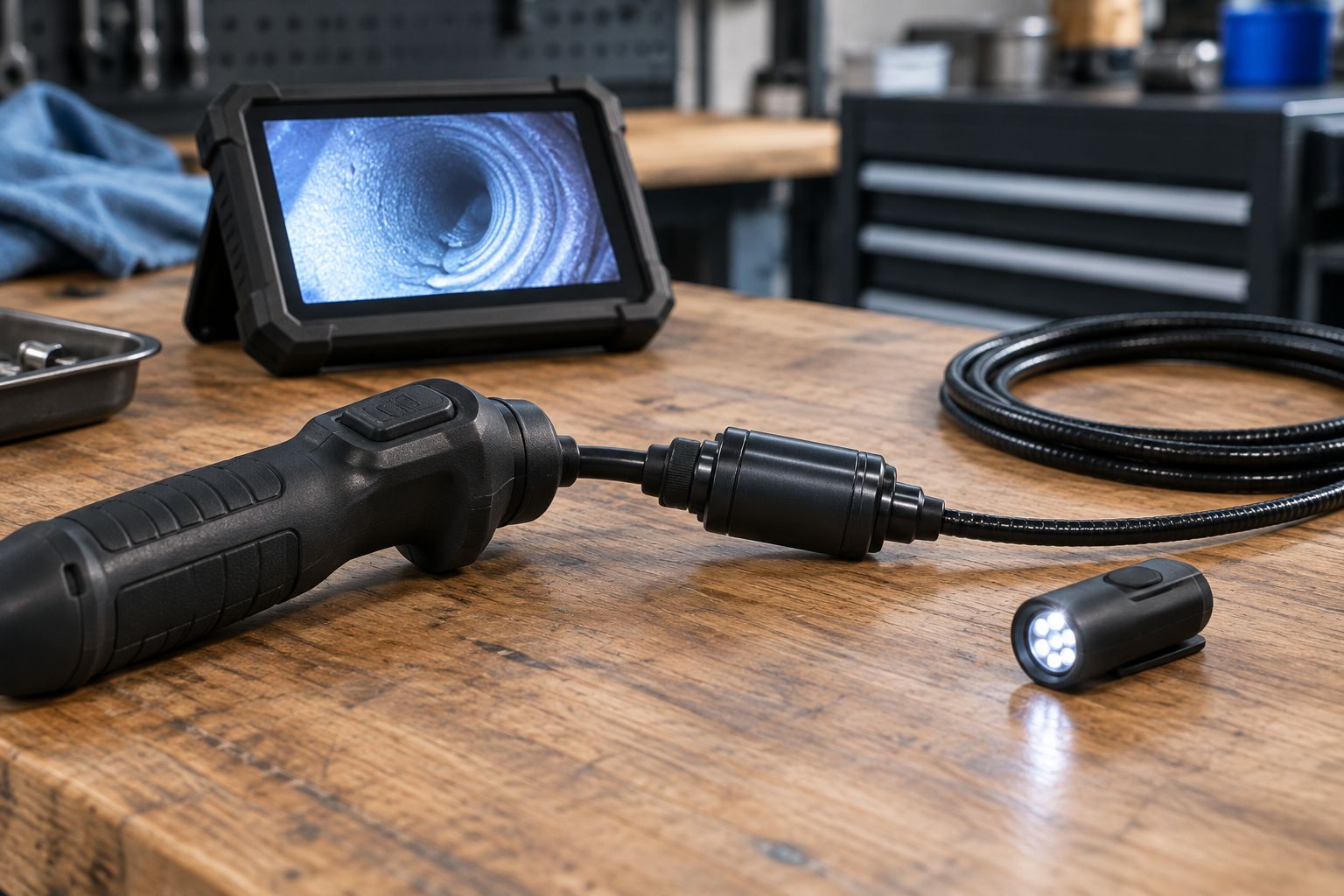
Not every gap requires a new borescope. If you already own an optical borescope, a video coupler connects the eyepiece to a camera body — the Universal Borescope Video Coupler is listed in two C-mount coupler types depending on your borescope's eyepiece. A separate LED light handle adds illumination on units where the built-in light source falls short. Neither accessory replaces a full videoscope purchase; both extend equipment already on the shelf.


Why people switch from Harbor Freight borescopes
The pattern repeats: a technician buys the Harbor Freight unit for one job, then hits a wall on the second or third. Common triggers:
- No recorded output for a work order or client file — a live-view-only unit can't produce the HD footage a documentation requirement calls for.
- No coupler or light-source upgrade path — a sealed consumer unit doesn't accept a separate video coupler or LED light handle the way an optical borescope built for accessories does.
- No standards reference for an industrial or facility inspection — some inspection records need a borescope manufactured to comply with published standards, not a general consumer camera.
- Daily rotation wears out a unit built for occasional use — repeated field deployment is a different duty cycle than a garage shelf.
“A sealed consumer borescope has no upgrade path; a system built around couplers and light handles does.”
When the Harbor Freight borescope is still the right call
If the job is a single inspection — one look behind a dashboard, inside a wall cavity, or under an appliance — and nobody downstream needs the footage, the Harbor Freight unit does that job at a fraction of the commitment of a configured industrial system. Buy Fiberscope equipment when the borescope has to work again next week, produce a filed record, or reference a published standard; stay with the consumer unit when it doesn't.
FAQ
What's the best Harbor Freight borescope alternative for daily industrial use in 2026?
The Fiberscope Rigid Borescope is the best fit for daily industrial use in 2026 because it's manufactured to comply with current industrial-inspection standards rather than sold as a sealed consumer unit. Confirm probe length and diameter against your access opening before ordering.
Is the Fiberscope Rigid Borescope better than Harbor Freight's borescope?
It's better for standards-referenced, repeated industrial inspection because it's built to comply with published standards and supports separate couplers and light handles. Harbor Freight's unit is better suited to a single, occasional check.
Can I upgrade an existing optical borescope instead of buying a new one?
Yes, a video coupler connects an existing optical borescope's eyepiece to a camera body, and a separate LED light handle adds illumination. This avoids a full videoscope purchase when the optical borescope itself is still usable.
Does the Videoscope Voyager M40 HD record video?
Yes, the Voyager M40 HD is built with HD video output for recorded, filed inspections rather than live-view-only display. That makes it suited to work orders and client documentation.
What's the difference between a rigid and flexible borescope?
A rigid borescope uses a straight, non-bending shaft suited to line-of-sight access, while a flexible fiberscope or videoscope can route around bends. Choose based on whether the access path has bends the probe needs to follow.
Is the IP Endoscope Camera good for weekly field use?
It's positioned for repeat field rotation between a disposable consumer camera and a full industrial rig. Confirm probe diameter and cable length against your specific access opening and route length before ordering.
How much probe length do I need compared to a Harbor Freight borescope?
Probe length depends on your access opening and route length, not on matching a competitor's cable. Measure the actual route and confirm the exact probe length with Fiberscope before ordering any system.
When should I stick with a Harbor Freight borescope?
Stick with it for a single, one-off inspection where nobody downstream needs recorded footage or a standards reference. Once the job repeats or requires documentation, a configured system closes that gap.
One last thing
One detail buyers skip: the Universal Borescope Video Coupler is listed in two C-mount coupler types, not one. Checking which type matches your borescope's eyepiece before ordering is often the difference between reusing an optical borescope already on the shelf and buying a full videoscope system that wasn't necessary.

Leave a comment
This site is protected by hCaptcha and the hCaptcha Privacy Policy and Terms of Service apply.