

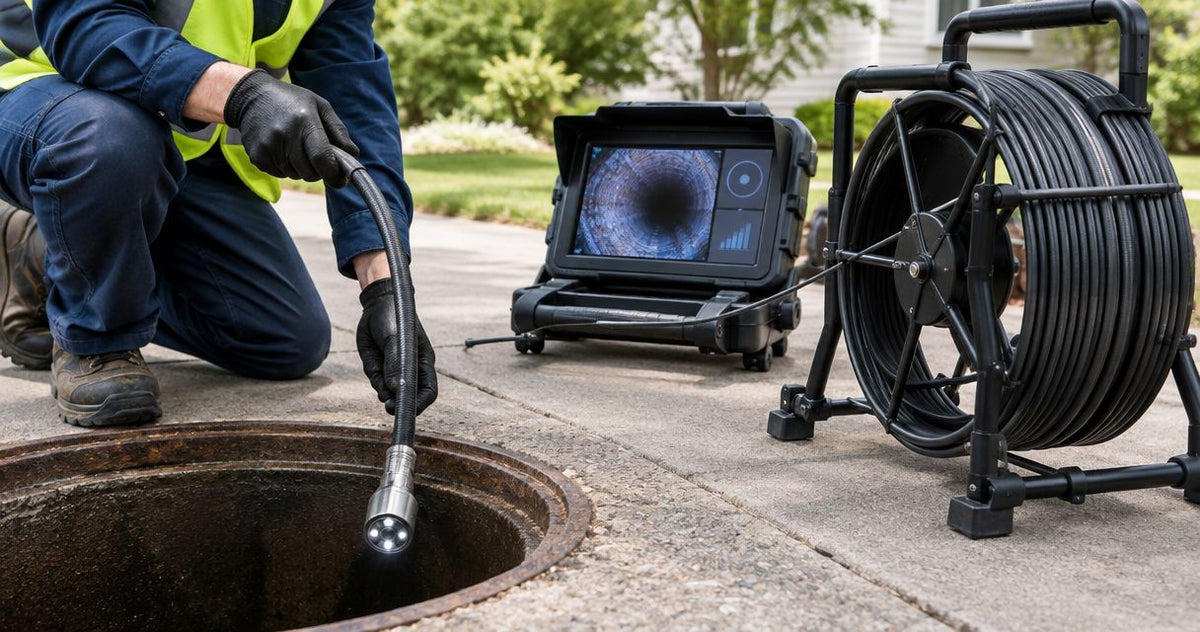
A sewer camera is only as useful as the footage it can reach. The usual failure is a camera that stops 20 ft (6 m) short of the defect, or a reel so heavy that nobody carries it past the cleanout. This guide shows how to size cable length against the run you actually inspect, and which Fiberscope.net systems fit which run.
The short answer: for drain lines up to 100 ft (30 m), the HATHORN Micron covers it at about 16 lb (7.3 kg). For longer laterals, the VIPER family is the reel-based option, and the final reel length is set per configuration with a specialist. Fiberscope.net sells the products discussed here and services them in-house.
- Size cable length to your longest typical run from the access point, then add margin for bends.
- HATHORN Micron inspects drain lines up to 100 ft (30 m) and weighs about 16 lb (7.3 kg).
- Head diameter limits what you can reach as much as cable length does: match it to the smallest pipe and trap.
- Cable length for reel systems is configured per job, so send run length, pipe ID and bends before ordering.
How to size sewer camera cable length
Measure the longest run from your normal access point to the farthest point you need to see, then buy the reel that covers it with margin. Access point means the cleanout, vent stack or removed toilet, not the property line.
Three things eat into the nominal cable length:
- Bends and traps. Every 90° bend and P-trap adds friction and makes the cable harder to push. A camera that reaches its rated length in a straight pipe reaches less through a fixture-to-lateral route.
- Pipe size. A larger pipe lets the cable curl and buckle. A 2-inch line keeps it straighter than a 6-inch line, so small pipes often push farther per foot of cable.
- Starting point. Entering at a roof vent or a floor drain changes the effective run before the camera has seen a single foot of pipe.
Push cameras do not propel themselves. Skids and centering aids hold the head off the pipe floor, but the push still comes from you. For very long straight mainlines, a powered crawler is a different tool class, and a pole camera such as the CYCLOPS TZ covers 4–80 in pipes from a manhole without a cable run at all.
Cable length by job
Most residential and light commercial work falls into three bands. Pick the band, then pick the system.
| Job | Typical access | What drives the choice |
|---|---|---|
| Kitchen, bath and floor drains, 1.5–3 inch | Cleanout or fixture | Head size through the trap, then reel weight |
| Lateral from house to main, 3–6 inch | Cleanout or vent stack | Reel length, sonde for locating, recording |
| Long laterals and mainline stubs | Manhole or exterior cleanout | Reel length, footage counting, locator pairing |
Watch for the mismatch that costs the most: buying cable length for the long lateral and then finding the head too large for the P-trap. Plumbers who run both job types often keep a small camera and a long-reel camera on the truck rather than one compromise.
Systems compared by reach and pipe size
The table lists the sewer and drain systems where the store pages give a reach or pipe-range figure. Where a cell shows a dash, the reel length is set when the configuration is specified.
| System | Cable reach | Pipe range | Locating | From |
|---|---|---|---|---|
| HATHORN Micron | Up to 100 ft (30 m) | Drain lines | 512 Hz sonde | $4,300 |
| MiniFlex 2 19mm | — | Small drains, 1.25 inch and up | 512 Hz sonde | $5,229 |
| MiniFlex 2 36mm | — | 2–6 inch | 512 Hz sonde | $6,890 |
| VIPER / VIPER Mid | Reel, set per configuration | 1.25–6 inch straight runs (1-inch head) | 512 Hz in the 1-inch self-levelling head | — |
Prices are the current product-page prices and move when the configuration changes.
HATHORN Micron: best for drain lines up to 100 ft
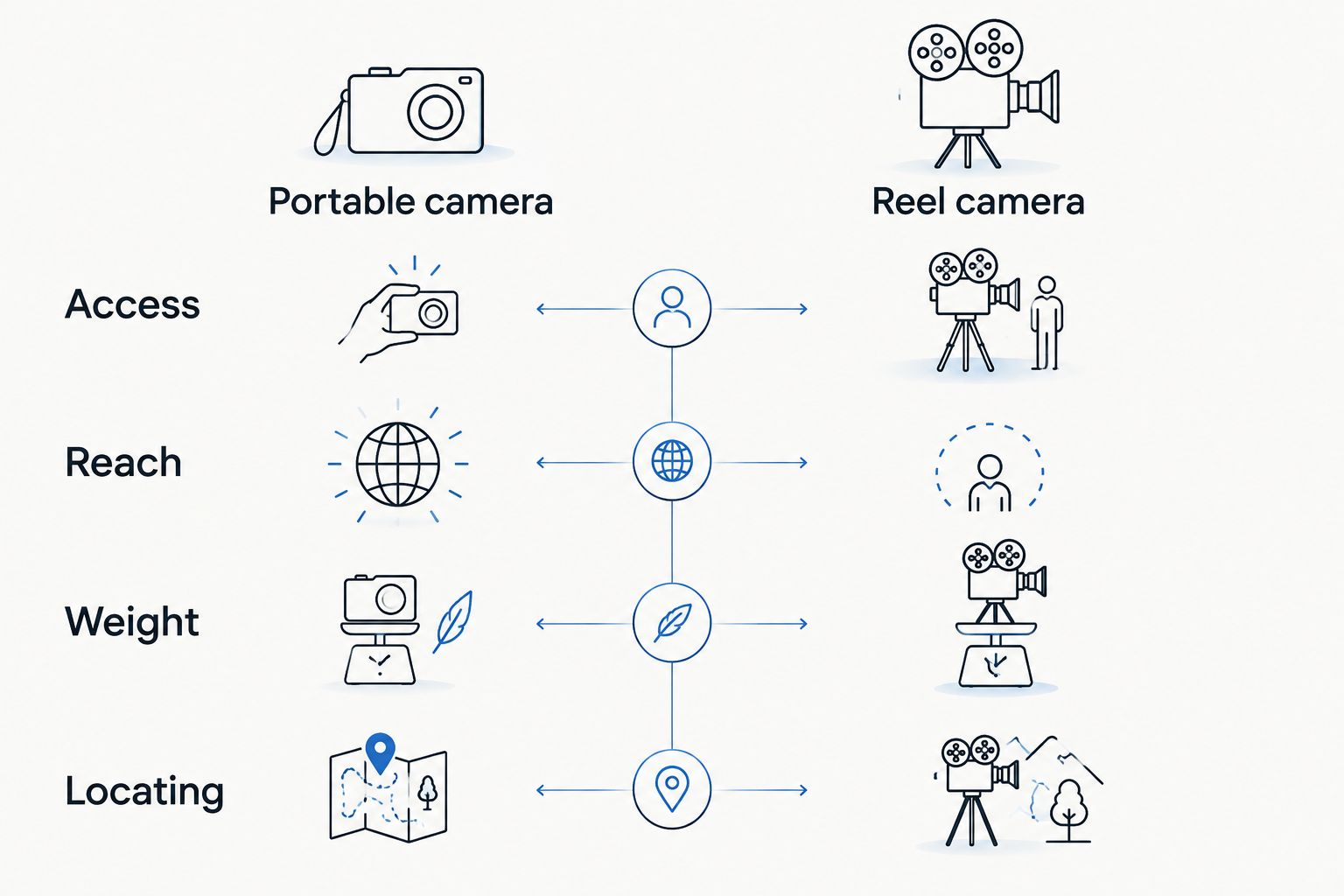
The HATHORN Micron is the portable choice. It inspects drain lines up to 100 ft (30 m), weighs about 16 lb (7.3 kg) and carries a 512 Hz sonde in the head, so a receiver can find it from above ground. It streams to a phone or tablet over its own Wi-Fi signal with a free app. From $4,300.
The limit is the same as the strength: 100 ft covers most in-house drains and short laterals, but a 150 ft (46 m) lateral to a street main is out of reach. A tech who regularly runs past 100 ft should be on a reel system.
MiniFlex 2 19mm: best for tight traps and small lines
Head size, not cable length, is what stops most small-line jobs. The MiniFlex 2 19mm turns through a 1.25-inch P-trap and carries a 512 Hz sonde. A customer, Hayden E., reports using it to get through 1.5-inch pool elbows and diagnose a collapsed skimmer line. From $5,229.
For 1.5-inch lines with tight 90° bends it is the better tool than the 1-inch VIPER head. For a 5-inch lateral at 120 ft, it is the wrong tool.
MiniFlex 2 36mm: best for 2–6 inch pipes
The MiniFlex 2 36mm is built for 2-inch to 6-inch pipes and delivers a higher-quality image for accurate decisions, with a 512 Hz sonde in the head. It suits the middle of the market: laterals and building drains where the 19mm head is undersized. From $6,890.
VIPER and VIPER Mid: best for long lateral reels
The VIPER family is the reel-based line. The 1-inch straight-view head is rated for 1.25–6 inch straight runs, which covers most residential laterals, and it is the only VIPER head with a 512 Hz sonde. It records to SD and USB. Pricing and reel length depend on the configuration.
For 1.5-inch lines with tight 90° bends, the smaller MiniFlex 19mm is the better tool. For long straight laterals, VIPER reels give you the length the portable systems cannot. If you want the full reel-length and head-compatibility picture, see sewer camera reels, cable length and head compatibility.
Locating where the cable ends
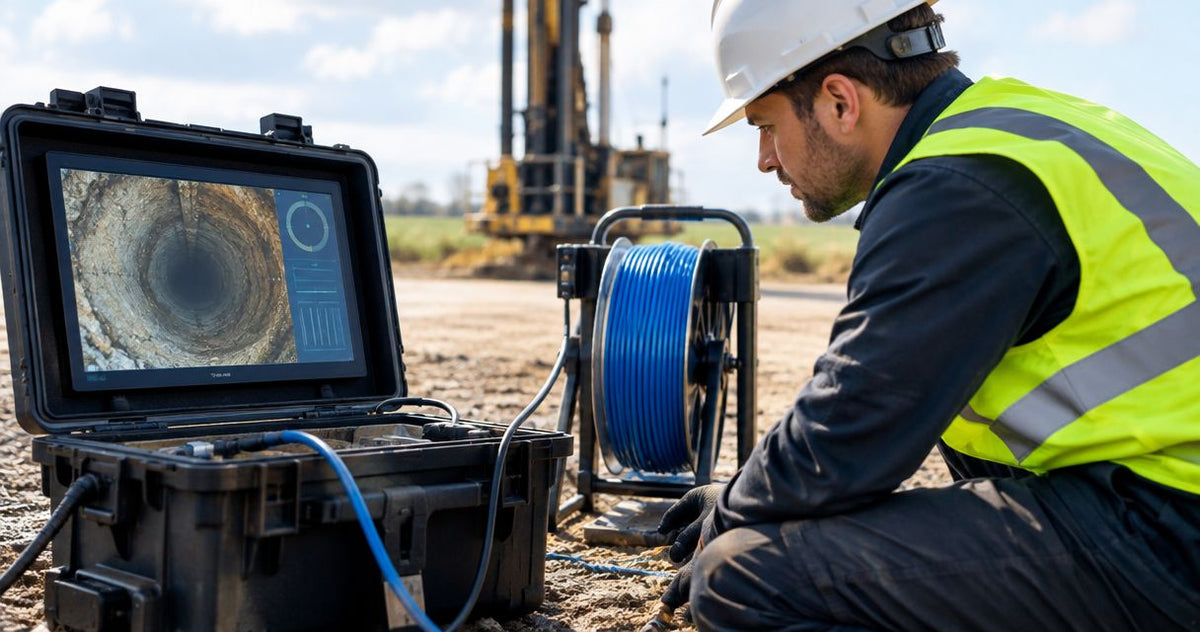
Cable length does you no good if you cannot say where the head is. Locating needs three parts: a camera with a sonde in the head, a compatible receiver, and a clear read of the frequency. The sonde frequency here is 512 Hz, so the receiver must track 512 Hz. The SnapTrack receiver covers 512 and 640 Hz, with optional 815 Hz and 33 kHz.
Rebar, metal and heavy interference distort the field, so treat depth readings under them as approximate. For how this works over pavement, see can a 512 Hz sonde locator find lines under pavement. The SnapTrack sonde locator is the matching receiver. For a buying comparison of locating cameras, see best sewer cameras with 512 Hz locating.


Other options
When a lateral runs past what a portable camera reaches and you need a powered crawler, a tracked system such as the RIDGID SeeSnake Max rM200 is the stronger fit; its specs are on the manufacturer page at ridgid.com/us. For pipes above 6 inches inspected from a manhole, the CYCLOPS TZ pole camera avoids the cable-length question entirely.
Common mistakes
- Buying length for the longest job. If only 1 in 20 inspections needs the long reel, rent or demo the long system for that job and carry the lighter one daily.
- Ignoring the trap. The head must clear the smallest fitting on the route, not just the pipe it ends in.
- Skipping the locator. A camera with a sonde and no receiver cannot tell you where to dig.
- Counting rated length as usable length. Plan for less through bends.
What you'll also need
A receiver for the sonde, a light source only if your system lacks one in the head, and skids if the head drags in larger pipe. Skids support and center the head, but they do not propel it.
FAQ
How long should a sewer camera cable be?
Long enough to cover your longest typical run from the access point, with margin for bends. For drain lines up to 100 ft (30 m), a portable system like the HATHORN Micron covers it; longer laterals need a reel.
Does a longer cable mean a better camera?
No. A long cable on a head that is too big for the P-trap stops at the first fitting. Match head diameter to the smallest pipe first, then choose length.
Can I rent a sewer camera for one long lateral?
Yes. Fiberscope.net rents equipment for short jobs, so you can rent a long-reel system for the odd long run instead of buying one.
Do I need a locator with a sewer camera?
Only if you need to mark the position above ground. The camera needs a sonde in the head, and you need a separate receiver tuned to its frequency.
Does pipe size change how far the cable pushes?
Yes. Larger pipes let the cable buckle, so reach drops. Small pipes keep it straighter, which usually pushes farther per foot of cable.
Get the reel length matched to your runs
Send us your pipe ID, run length, bends and traps, pipe material, whether you need locating, and your recording or report needs, and a Fiberscope.net specialist will match the right head and reel. Call 1-877-613-2210, Monday to Friday, 8:00 to 18:00 CST, or use the Fiberscope.net contact page.
About the author. Vladimir Khubiryants founded Fiberscope.net to give professionals access to reliable video inspection equipment without enterprise pricing. For over 20 years he has sourced and tested borescopes, sewer cameras and fiberscopes in Fiberscope.net's in-house test and repair facility, helping plumbers, pipeline engineers, aviation and military teams choose the right tool for the job.

Leave a comment
This site is protected by hCaptcha and the hCaptcha Privacy Policy and Terms of Service apply.